
Blog
02/26/2026
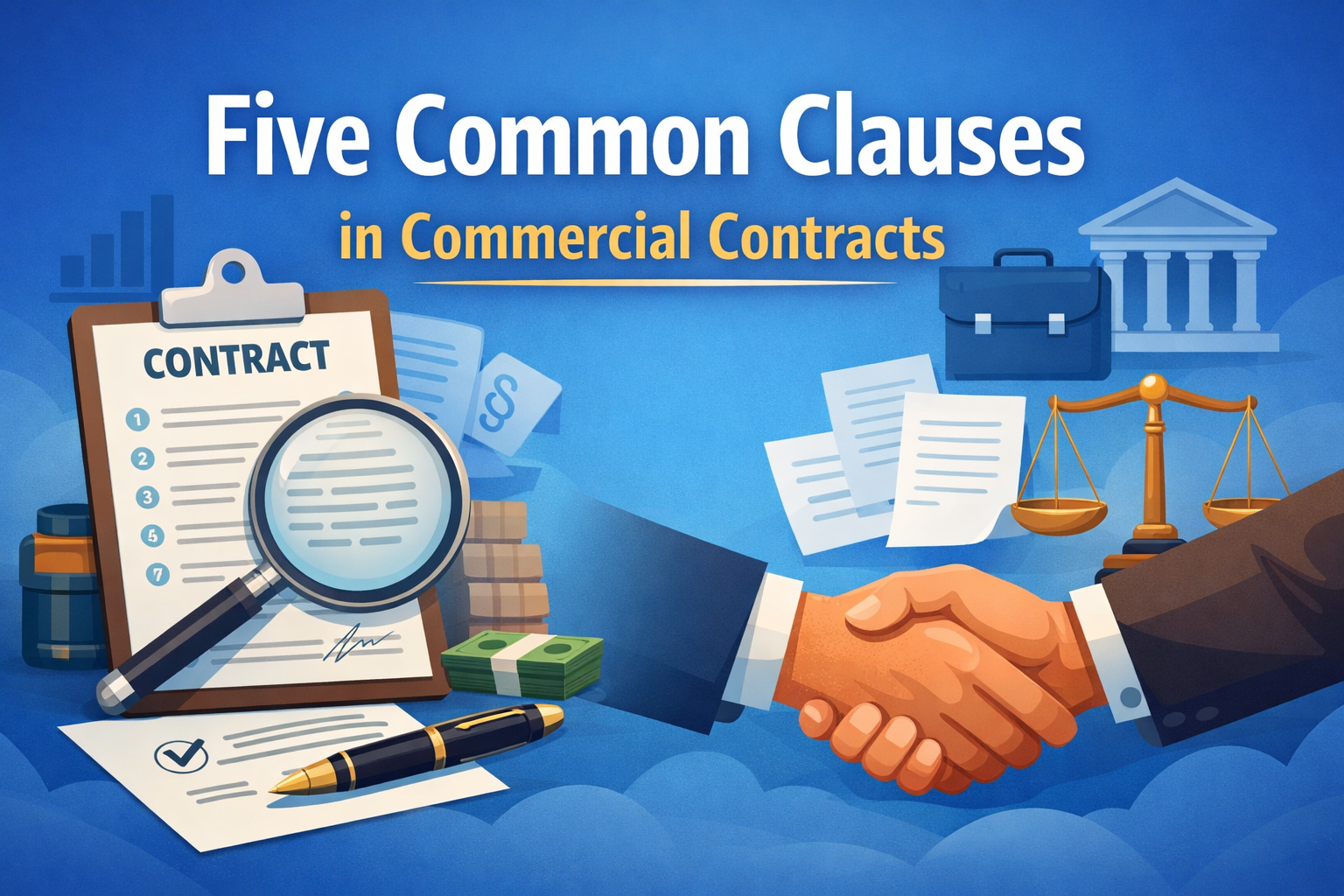
Commercial contracts may differ in structure, length, and industry focus, but many of them rely on the same core clauses. These provisions determine how risk is allocated, how money moves, how confidential information is handled, and how the relationship can end if things go wrong.
For lawyers and legal teams, understanding these clauses isn’t optional. They are where commercial intent turns into enforceable obligation. Small adjustments to a liability cap or termination right can materially shift exposure. Vague payment language can create downstream disputes. Overbroad confidentiality terms can become operational burdens.
This post highlights five of the most common clauses in commercial contracts and explains what they do, why they matter, and how to approach them thoughtfully. It’s not an exhaustive list, but it covers key provisions that most often shape commercial risk.
1. Limitation of Liability
What it does
A limitation of liability clause caps the amount one party can recover from the other if something goes wrong. It often sets a financial ceiling on damages, excludes certain types of damages (such as consequential or indirect damages), and may include carve-outs for specific risks such as intellectual property infringement, confidentiality breaches, or gross negligence.
Why it matters
This clause defines the financial exposure of the deal. In many commercial contracts, it has more practical impact than pages of operational language. A poorly drafted or uncapped limitation can shift significant risk onto one party. Conversely, an overly restrictive cap can leave a party underprotected if a serious failure occurs.
How to handle it
Start by aligning the cap with business reality. Consider contract value, potential downstream harm, and insurance coverage. Pay close attention to carve-outs and how they interact with indemnification obligations. Most importantly, recognize that this is a commercial risk decision, not just a drafting exercise.
2. Indemnification
What it does
An indemnification clause requires one party to defend, reimburse, or hold the other harmless for certain losses, typically arising from third-party claims. Common triggers include intellectual property infringement, personal injury, property damage, or breaches of specific contractual obligations. Unlike a general liability provision, indemnification focuses on shifting responsibility for defined categories of risk.
Why it matters
Indemnity provisions can create significant financial exposure, especially when they include defense obligations or are not clearly capped. They often operate alongside limitation of liability clauses, and the interaction between the two can materially affect overall risk allocation. Poorly defined indemnities can also lead to disputes over who controls the defense and how settlements are handled.
How to handle it
Clarify the scope of covered claims and whether the obligation includes defense, reimbursement, or both. Watch for uncapped or broadly worded indemnities that extend beyond the commercial expectations of the deal. Finally, review how the indemnity provision interacts with the liability cap and insurance coverage to ensure the overall risk allocation is intentional, not accidental.
3. Termination (For Cause or for Convenience)
What it does
A termination clause defines how and when a party can end the contract. Termination for cause typically allows exit if the other party materially breaches the agreement and fails to cure within a specified period. Termination for convenience allows one or both parties to end the contract without breach, usually with advance notice and sometimes with financial consequences.
Why it matters
Termination provisions shape leverage and long-term risk. A broad termination-for-convenience right can provide flexibility, but it can also undermine predictability and investment in the relationship. Termination-for-cause language determines how quickly a party can exit a failing arrangement, and how to handle disputes over contract breaches.
How to handle it
Review notice periods and cure rights carefully, as they control how disputes unfold in practice. Consider the operational impact of early termination, including transition obligations, payment for work performed, and data return or transfer. As with liability provisions, termination rights should reflect business strategy, not just legal preference.
4. Payment Terms
What it does
A payment clause defines when, how, and under what conditions one party must pay the other. It may address pricing structure (e.g., fixed fee, milestone-based, subscription), invoicing requirements, payment deadlines, late fees, taxes, or rights to suspend services for nonpayment.
Why it matters
Payment terms directly affect cash flow, leverage, and dispute risk. Vague triggers for invoicing or unclear acceptance criteria can delay payment and create friction. Overly rigid terms, on the other hand, may strain relationships or become impractical in long-term engagements. Because money sits at the center of commercial agreements, even small ambiguities can escalate quickly.
How to handle it
Align payment triggers with clear deliverables or measurable milestones. Define invoicing and acceptance procedures precisely to avoid delay. Review suspension rights and late fee provisions carefully to ensure they are enforceable and commercially realistic. Payment language should support operational clarity, not create downstream disputes.
5. Confidentiality
What it does
A confidentiality clause restricts how parties use, disclose, and protect sensitive information shared during the business relationship. It typically defines what qualifies as “confidential information,” sets out permitted uses, lists standard exceptions (such as information that’s already public or is developed independently), and establishes how long confidentiality obligations last.
Why it matters
Confidentiality provisions protect proprietary information, trade secrets, pricing, and business strategy. Overly broad definitions can create operational burdens, while narrow ones may leave important information unprotected. The duration of confidentiality obligations can also have long-term consequences, especially in technology, healthcare, and other data-sensitive industries.
How to handle it
Review the definition of confidential information carefully to ensure it is clear and workable. Confirm that standard exceptions are included and realistic. Align the duration of obligations with the sensitivity of the information involved. A strong confidentiality clause protects legitimate interests without creating impractical compliance obligations.
Conclusion: The Clauses That Shape Commercial Risk
Commercial contracts can run dozens of pages, but risk often concentrates in a handful of clauses. Limitation of liability, indemnification, termination rights, payment terms, and confidentiality provisions shape how money moves, how disputes unfold, and how exposed each party is if something goes wrong.
Understanding what these clauses do is the first step. Handling them thoughtfully is what protects your business.
In practice, reviewing and negotiating these provisions means comparing versions, tracking revisions, checking cross-references, and ensuring consistency across drafts. The mechanics matter just as much as the strategy.
If you want to streamline clause review and reduce friction in redlining, request a demo of BoostDraft to see how AI-assisted drafting can help you manage commercial risk more efficiently, without disrupting the way you already work.

Recent Post