Blog
12/02/2025
The Art (and Pressure) of Reviewing Contracts
Reviewing a commercial contract is where law meets business…and where small mistakes can become expensive ones. Every clause carries weight. Every definition shapes obligations. And every revision affects timelines, revenue, and relationships.
Speed matters. So does accuracy. But neither means much without context.
A strong review isn’t just about marking up language. It’s about understanding the deal underneath the document, spotting the risks that actually matter, and translating all of that into clear, actionable guidance for the business. It’s analysis, communication, and judgment, all happening at once.
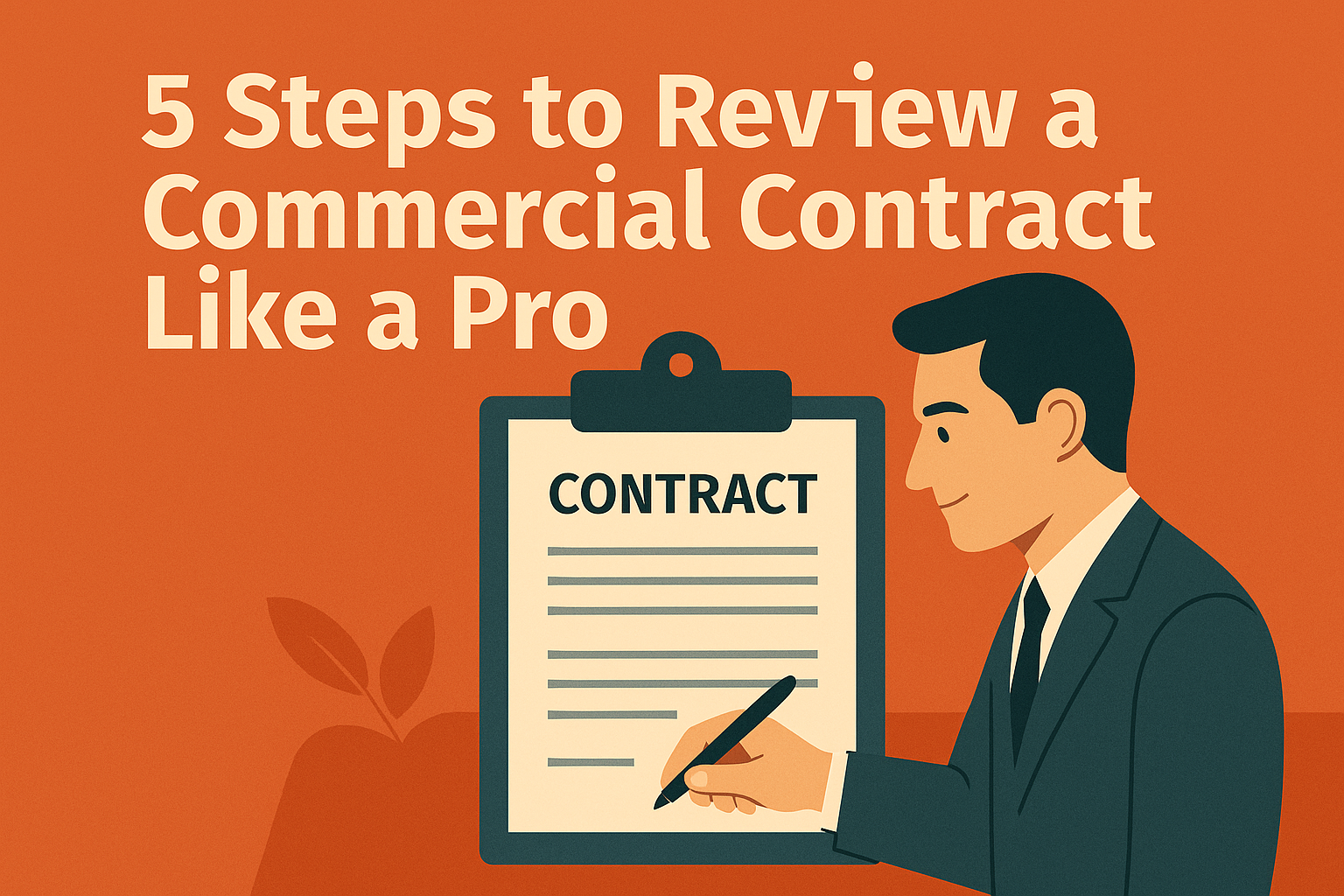
That’s why reviewing contracts well is a skill worth mastering. And with the right approach, it’s a skill any lawyer or legal professional can sharpen. Here are five steps to follow to review commercial contracts like a pro.
1. Start With the Business Context
Before you touch the redline, understand the deal.
The biggest mistake people make when reviewing a commercial contract is starting with the document. Professionals start with the business reality behind it.
Every clause reflects a pressure point. Every defined term encodes a choice. To review a contract like a pro, you first need to understand the deal that contract is meant to serve.
That means asking questions the document can’t answer on its own:
- What is each party actually trying to accomplish?
- Where does the business see upside, and where does it see risk?
- What’s the relationship context? (New vendor vs. strategic partner vs. legacy customer.)
- What’s the acceptable risk profile? Some teams tolerate ambiguity; others don’t.
Pro reviewers don’t edit blindly. They anchor every markup in the commercial objectives that matter. If indemnity is a main concern, they read the whole contract with indemnity in mind. If timing or pricing flexibility is the primary pain point, that becomes the lens.
Because the truth is simple: you can’t review for risk until you know what the business actually fears. And you can’t negotiate effectively until you know what matters most.
Once the context is clear, the rest of the review — the structure, the analysis, the edits — becomes more precise and more defensible.
2. Build a Structured Review Process
Pros follow a system, not just instinct.
Once you understand the business goals, the next step is building a review process that’s repeatable, efficient, and airtight. The best contract reviewers don’t “wing it.” They follow a structure that keeps them fast, focused, and consistent no matter the contract type.
Start With the Big Picture
Before worrying about commas or cross-references, zoom out:
- What is the deal structure?
- What are the obligations on each side?
- Where does money flow, where does risk sit, and what triggers what?
A high-level scan helps you see whether the contract fundamentally aligns with what the business expects. Only once the overall outline makes sense do pros drill into the details.
Flag First, Fix Second
It’s tempting to redline as you go. But the fastest reviewers separate identification from revision. Flag issues on the first pass: ambiguities, inconsistencies, missing definitions, risky clauses. Resolve issues on the second pass: negotiate language, tighten clauses, remove redundancy.
This prevents you from getting bogged down in one paragraph while missing bigger inconsistencies elsewhere.
Compare Against What You Already Know
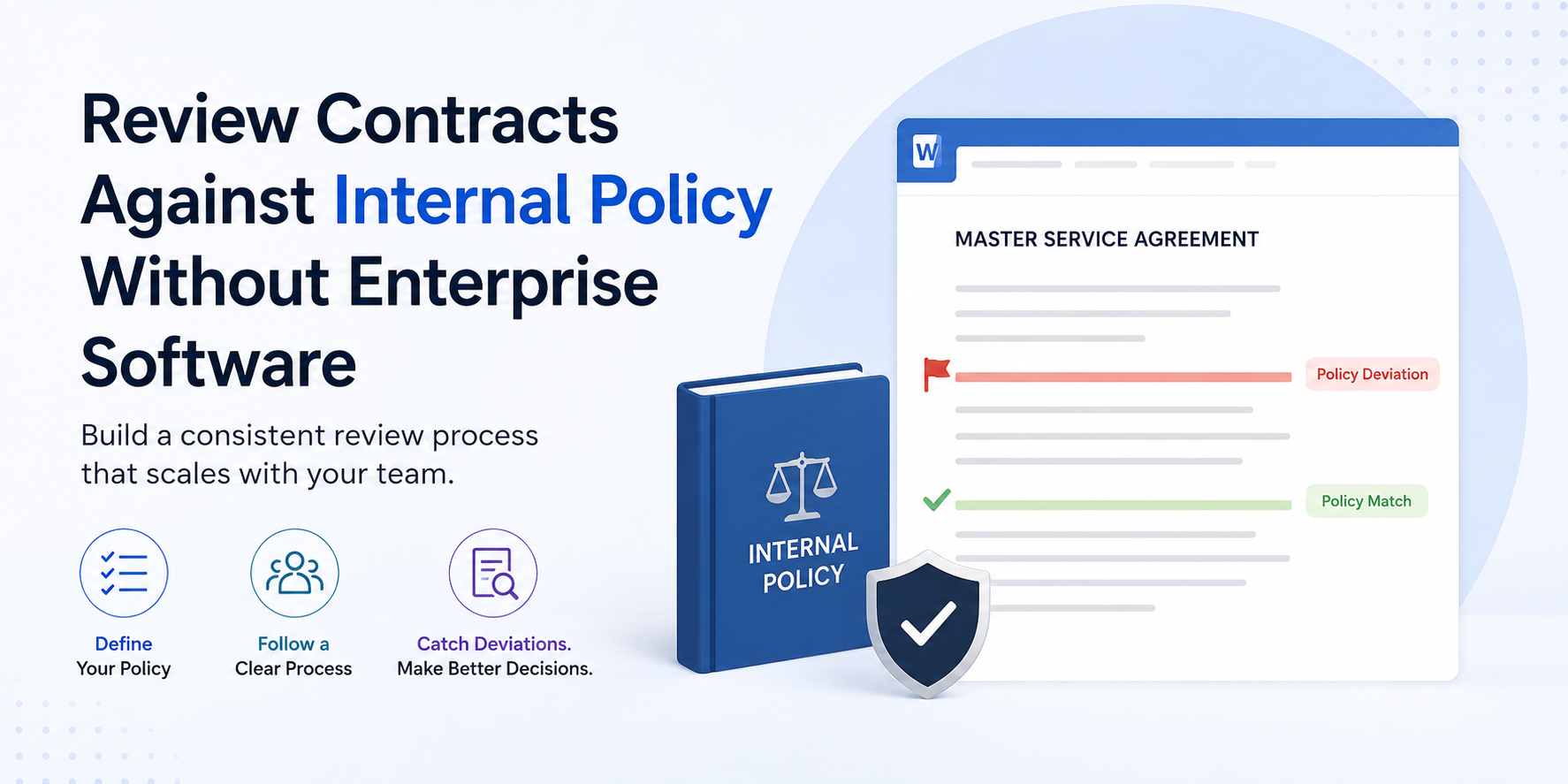
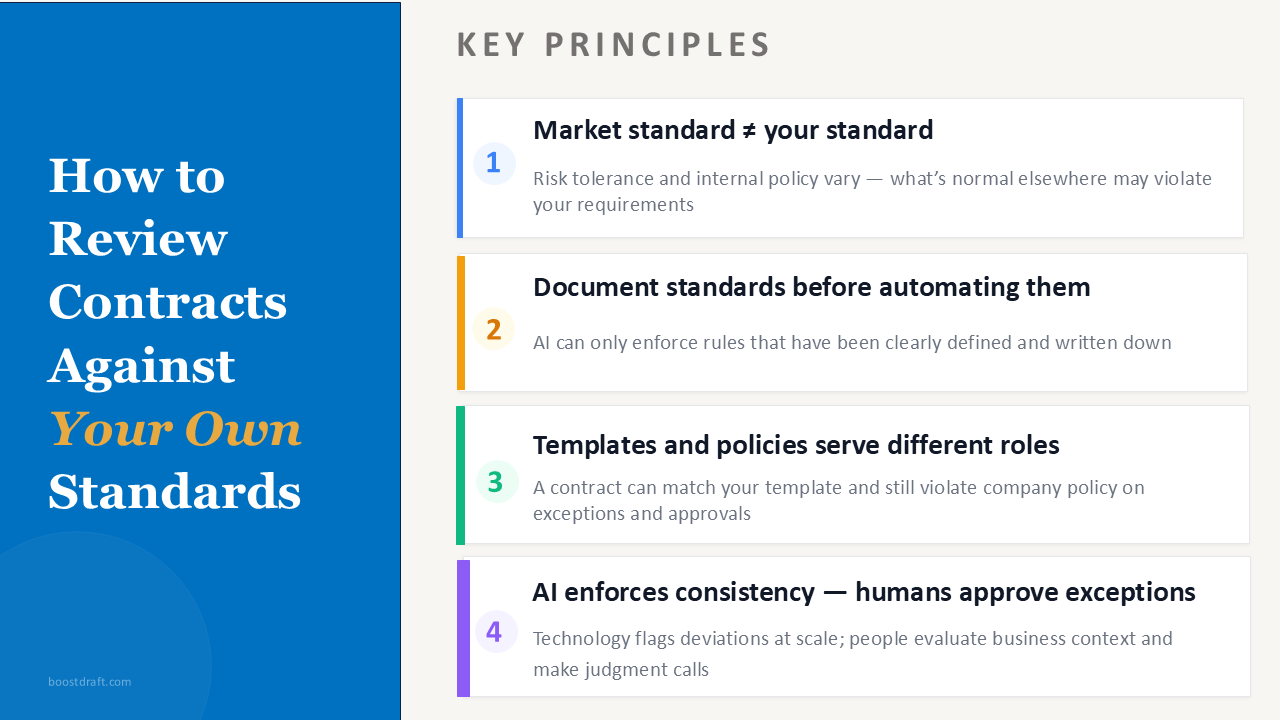
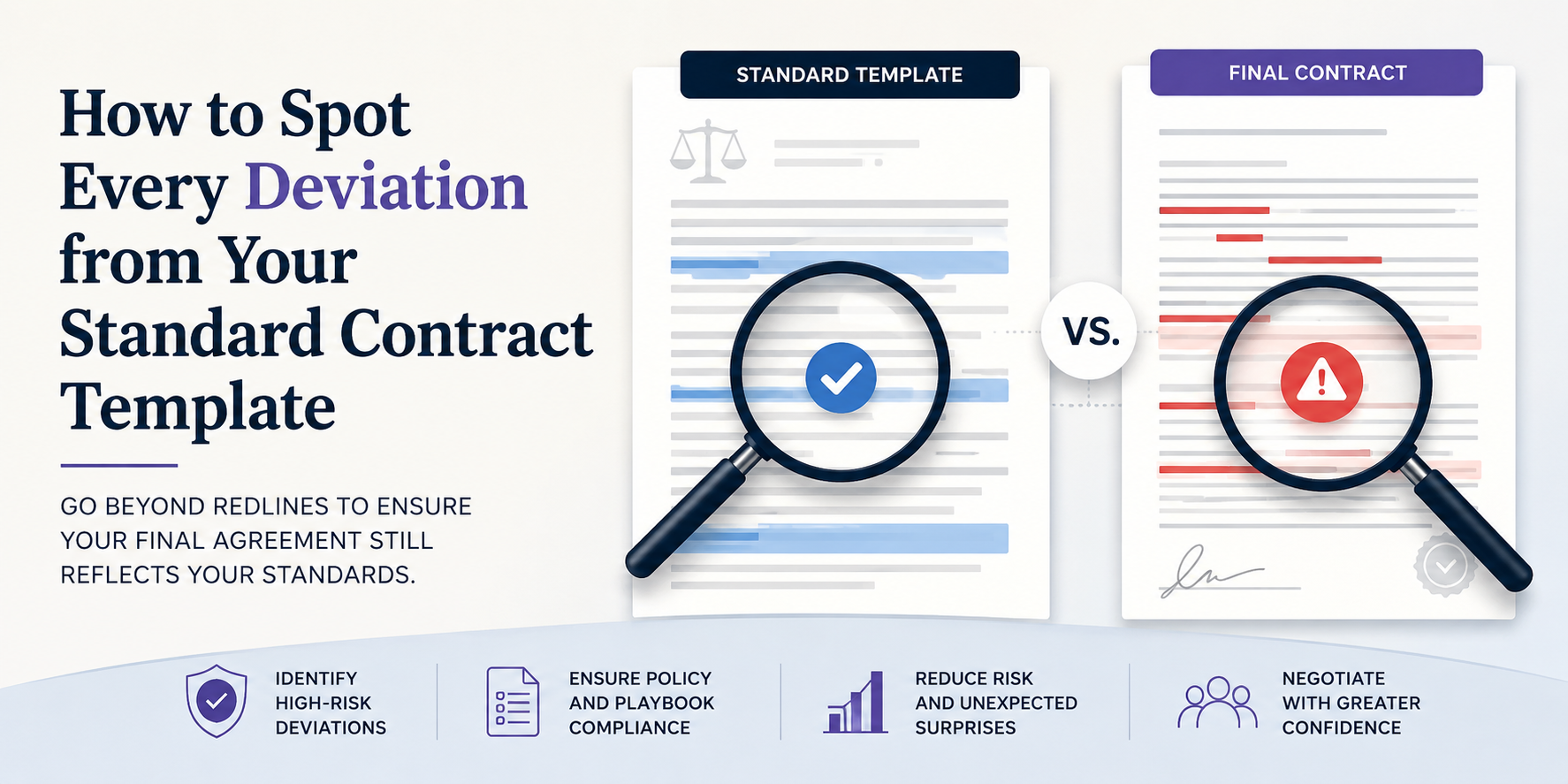
Most commercial contracts aren’t written from scratch. They’re variations on your company’s or firm’s templates, past deals, and industry norms.
Professional reviewers anchor every new contract against:
- Precedents
- Playbooks
- Prior negotiated versions
- Risk positions from similar deals
Automated comparison tools streamline this step.
Target Precision, Not Perfectionism
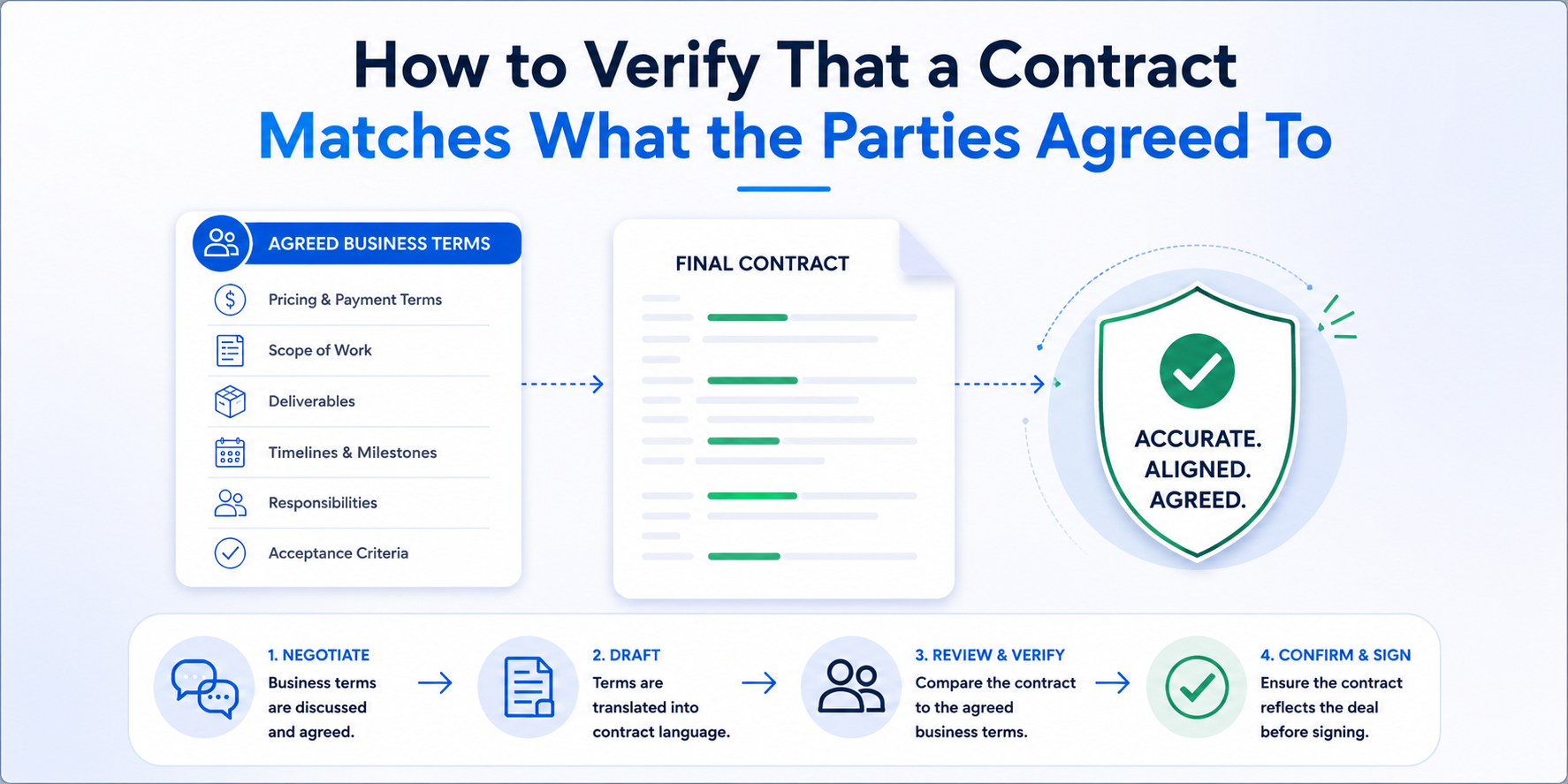
Alignment with your company’s or client’s risk tolerance is the aim, not perfectionism. The goal isn’t to re-draft the entire contract into your ideal form. It’s to protect the business, reduce ambiguity, and ensure the document actually reflects the deal.
A structured process helps you do all of that without losing speed.
3. Use Tools That Keep You Close to the Document
Great reviewers use technology, but they stay in control.
Contract review demands sustained focus. The moment you start bouncing between windows — checking a definition in one tab, comparing versions in another — you lose context. Tabs multiply, documents scatter, and attention drifts from substance to logistics.
Professionals minimize that cognitive slip.
The best tools don’t force you into new platforms or interfaces. They work inside the environment where the review already happens, quietly handling the mechanical parts of the job so you can stay immersed in the details that matter.
Think:
- Automatic cross-reference checks
- Clean version comparisons
- Consistent definitions and numbering
- Formatting that fixes itself instead of breaking itself
All without leaving the document.
Pro tip: choose software that operates inside Word, so you can compare versions, track definitions, and detect structural inconsistencies without disrupting your workflow.
The result is faster review, fewer errors, and more time for the parts of the job that require sound legal judgment.
4. Cultivate Soft Skills for Hard Reviews
Reviewing contracts isn’t only technical; it’s relational.
Great contract reviewers aren’t just good at spotting risks. They’re also good at communicating them.
Commercial contracting is collaborative by nature: firm lawyers work with business and finance clients, while in-house lawyers work with sales, procurement, and finance teams, all of whom have different priorities. The reviewers who stand out are the ones who can translate legal detail into clear, actionable guidance for people who don’t think like lawyers.
Be Clear
A perfect redline means nothing if no one understands it. Use comments to explain why a change matters, not just what you changed.
“Ambiguous — clarify?” → weak.
“This phrasing could shift liability for X scenario — propose tightening to avoid unintended exposure.” → strong.
Clear communication earns cooperation.
Escalate Wisely
Not every discrepancy is a hill worth dying on. Pros know when to advocate, when to compromise, and when to ask the business, “How much risk are we actually willing to take here?”
This judgment builds trust quickly.
Stay Curious
Behind every strange clause is a story: a past dispute, a regulatory quirk, a bad experience. Asking why the other party insists on something often reveals faster solutions than pushing back blindly.
Curiosity can shorten negotiations.
Partner, Don’t Police
Stakeholders remember how Legal makes them feel. If your review style is collaborative, pragmatic, and grounded in the business’s goals, they’ll bring you in earlier. That leads to better contracts.
Soft skills don’t replace technical skill, but they do amplify it. They’re what make the difference between a slow review and a smart one.
5. Develop a Feedback Loop
Pro reviewers improve every time they review.
The best contract reviewers don’t treat each deal as a one-off task. They treat it as input. After every negotiation, they look for patterns: clauses that always trigger debate, definitions that consistently confuse stakeholders, terms that slow cycles down every single time.
Instead of starting from scratch, they refine playbooks, update templates, and capture lessons learned so the next review is faster and clearer. Even small habits — keeping a running list of recurring issues, tagging clauses that worked well, noting which positions the business will or won’t accept — make a measurable difference over time.
This quiet discipline builds consistency and reduces friction, especially as teams grow. And it prevents the same problems from resurfacing deal after deal.
A strong feedback loop doesn’t just make reviews better; it makes reviewers better. It turns experience into structure, and structure into speed.
Conclusion: Review With Precision, Not Exhaustion
Reviewing a commercial contract like a pro isn’t about being the fastest redliner in the room. It’s about approaching every document with direction: understanding the deal, following a structured process, using tools that support your focus, and communicating in a way that moves the negotiation forward.
Mastery comes from repetition, judgment, and the right systems. When you combine those with technology that reduces friction instead of adding it, contract review becomes less of a scramble and more of a craft.
If you want to see how the right tools can help your team review contracts faster, cleaner, and with fewer errors — without leaving Word — we can show you.
Get a demo of BoostDraft and see how smooth contract review can be.

Recent Post