
Blog
12/30/2025

Introduction: Why 2025 Felt Different
For legal tech, 2025 didn’t feel like just another year of incremental progress. It felt like a reckoning.
The excitement of earlier AI breakthroughs gave way to harder questions about reliability, risk, and real-world fit. Tools that once generated buzz were now expected to prove themselves under pressure. Buyers became more discerning. Investors became more selective. And conversations across the industry shifted from what’s possible to what actually works.
Healthy skepticism didn’t dampen enthusiasm for new technology. This was simply the year expectations caught up with reality. AI moved from novelty to scrutiny. Adoption was no longer assumed. Trust, usability, and fundamentals began to matter as much as ambition.
Here’s a look at the moments, signals, and shifts that defined legal tech in 2025 — and why this year may be remembered as the one when the industry truly grew up.
1. Capital Surged — Concentrated, Not Flooded
2025 wasn’t a year of indiscriminate funding. It was a year of selective conviction.
High-profile raises for a small number of legal tech companies, from AI-first players such as Harvey and Legora to legal practice platforms such as Clio, signaled that investors are bullish, but focused. Much of that capital flowed toward platforms with clear use cases, real adoption, and defensible differentiation, rather than broad promises to “transform law with AI.” At the same time, many quieter startups struggled to extend runway, reinforcing a harder truth: vision alone is no longer enough.
The funding story of 2025 wasn’t about exuberance. It was about focus. Investors backed companies that could demonstrate durability, customer trust, and a path to sustainable value.
2. AI Got a Reality Check
If 2024 was about discovering what generative AI could do, 2025 was about confronting what it should do.
Legal teams grew more discerning about where AI actually adds value…and where it introduces risk. Concerns around hallucinations, data handling, explainability, and reliability moved from abstract debates to practical decision criteria. Buyers began asking harder questions: Can we trust the output? Can we verify it? Does it fit our existing workflows, or does it force new ones?
The result was a noticeable cooling of blind enthusiasm, replaced by a more grounded approach. AI didn’t disappear from legal tech conversations; it matured. Teams increasingly favored tools that applied AI narrowly and responsibly, augmenting legal work instead of attempting to replace judgment. In 2025, credibility mattered more than capability alone.
3. Runway Mattered More Than Vision
Alongside major raises, 2025 also surfaced a quieter but important reality: not every legal AI story scaled as planned.
Some well-known startups faced hard constraints around runway, timing, and market readiness. In several cases, the technology itself wasn’t the issue. The challenge was aligning ambition with adoption, cost structure, and buyer expectations in a more cautious market.
These moments weren’t failures so much as signals. Legal tech entered a phase where sustainability mattered as much as innovation. Growth had to be earned through real usage, clear value, and operational discipline. In 2025, longevity became a competitive advantage — and the market began rewarding companies built for the long game.
4. Automation Moved From Replacement to Augmentation
Another quiet shift in 2025 was where innovation concentrated.
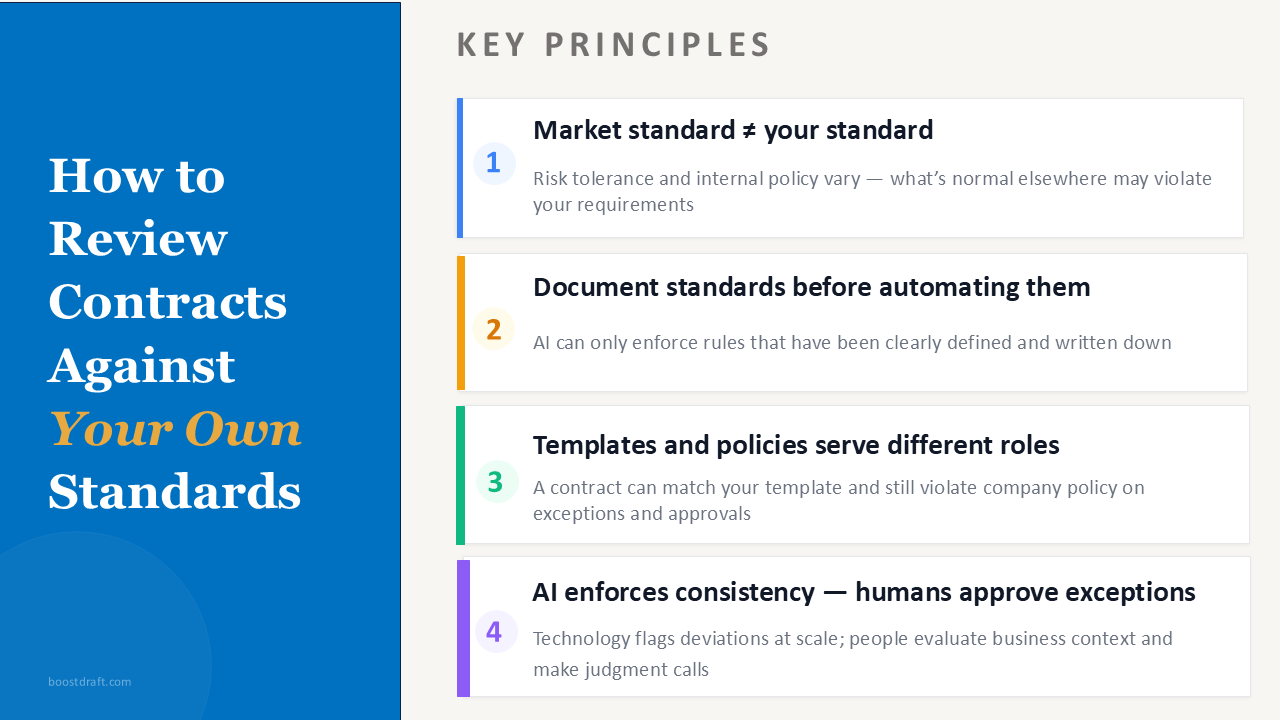
Rather than racing to fully automate drafting, for example, many legal teams focused on the less glamorous — but more reliable — layers of contract work: review, structure, consistency, and control. Tools that helped lawyers compare versions, manage definitions, enforce standards, and reduce downstream errors gained renewed attention.
This reflected a growing realism. Legal analysis is highly contextual and judgment-heavy. Contract review and structure, by contrast, are repeatable and measurable. In 2025, legal tech momentum moved toward strengthening the foundation of legal work — improving quality, predictability, and confidence — instead of chasing total automation.

5. Buyers Grew Up
By 2025, legal tech buyers had become noticeably more sophisticated.
Instead of asking what a tool could do in theory, teams focused on how it would actually fit into their environment.
Questions about implementation time, training burden, interoperability, and day-to-day usability moved to the forefront. Flashy feature lists mattered less than whether a solution would survive contact with real legal work.
This shift reflected experience. Many teams had already lived through overpromised rollouts and underused platforms. In response, buyers became more intentional: prioritizing tools that respected existing workflows, solved specific problems well, and earned trust through consistency rather than ambition.
6. Ecosystems Became More Important Than Platforms
In 2025, the conversation shifted away from finding a single, all-in-one solution.
Legal teams increasingly recognized that no platform can solve every problem across every aspect of a legal practice. Instead, the focus moved to layering the right tools for the right jobs, and making sure they work together. Interoperability, clean data, and flexible architecture became just as important as individual features.
This mindset helped reduce tool sprawl, rather than worsen it. By choosing systems designed to integrate and coexist, teams aimed to build ecosystems that support real workflows instead of forcing everything into a monolith. The future isn’t fewer tools or more tools; it’s better-connected ones.
7. The Human Edge Held Firm
Despite rapid advances in automation, 2025 reaffirmed something fundamental: legal judgment still matters.
As tools became more capable, teams grew more careful about where human expertise must remain central. High-stakes decisions, nuanced negotiations, and contextual risk assessments resisted full automation — and rightly so. Rather than try to replace lawyers, the most effective technologies focused on clearing space for them to think.
This reframing marked a turning point. The goal was no longer to eliminate human involvement, but to preserve it where it adds the most value. In 2025, the strongest legal tech strategies were the ones that respected the line between efficiency and judgment, using technology to support, not erase, the human edge.
Conclusion: What 2025 Made Clear (and What Comes Next)
Taken as a whole, 2025 marked a clear inflection point for legal tech. The conversation moved past experimentation and into responsibility. Teams became more deliberate about where technology belongs, more honest about what automation can and can’t do, and more focused on fit, trust, and durability.
The year reinforced a simple idea: progress doesn’t come from disruption alone. It comes from removing friction, strengthening foundations, and helping lawyers spend more time exercising judgment where it matters most.
That perspective sits at the heart of BoostDraft’s approach: reclaiming simplicity in an increasingly complex AI landscape, improving efficiency without forcing teams to change how they work, and automating what can be standardized while preserving human expertise.
If these themes resonate as you plan for what comes next, we welcome the conversation. Get a demo of BoostDraft to explore how thoughtful automation can support your team in the year ahead.

Recent Post