Blog
04/23/2026
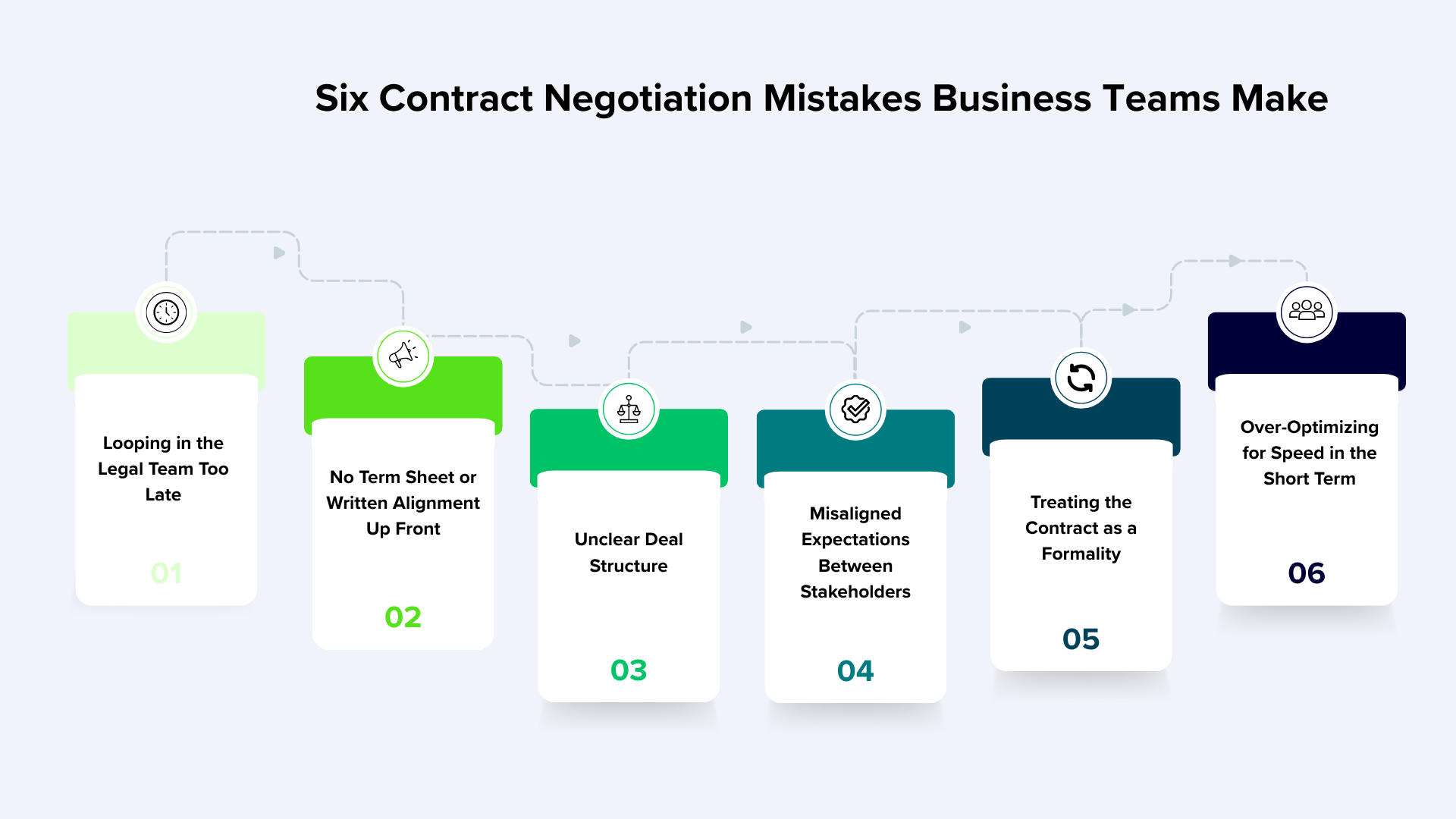
Most contract negotiations do not break down because of a single difficult clause or an uncooperative counterparty. More often, issues arise from how the deal is approached in the first place: when key stakeholders are involved, how terms are aligned, and how clearly the structure is defined before drafting begins.
In this post, we look at common business-side mistakes that create unnecessary friction during contract negotiation. These are not technical legal issues, but process and alignment problems that can slow deals down, lead to rework, and increase risk if left unaddressed.
Looping in the Legal Team Too Late
How It Happens
The legal team is often brought into the process after the core business terms have already been discussed or even informally agreed. A business team or client may align with the counterparty on pricing, timelines, scope, or key commercial points, and then hand the deal to the legal team expecting them to “paper it up” quickly.
Why It Becomes a Problem
At that stage, the legal team is working within constraints that may not be workable or aligned with the company’s risk tolerance. Terms that seemed straightforward in conversation may have legal or operational implications that were not fully considered. For example, a sales representative might agree to aggressive delivery timelines or overly flexible commercial terms, only involving counsel once they believe the deal is close to signing.
This often leads to delays as lawyers try to revise or unwind agreed points, or to friction with the counterparty if previously discussed terms need to be revisited. In some cases, the party may have to accept increased risk simply because it is too late to renegotiate key terms without jeopardizing the deal.
How to Avoid It
Involve counsel early enough to help shape the structure of the deal, not just document it. Align internally on key terms, risks, and constraints before presenting them to the counterparty. Even a brief legal review of a proposed deal structure or term sheet can prevent issues later. The goal is not to slow the process down, but to avoid rework and misalignment that ultimately delay the deal.
No Term Sheet or Written Alignment Up Front
How It Happens
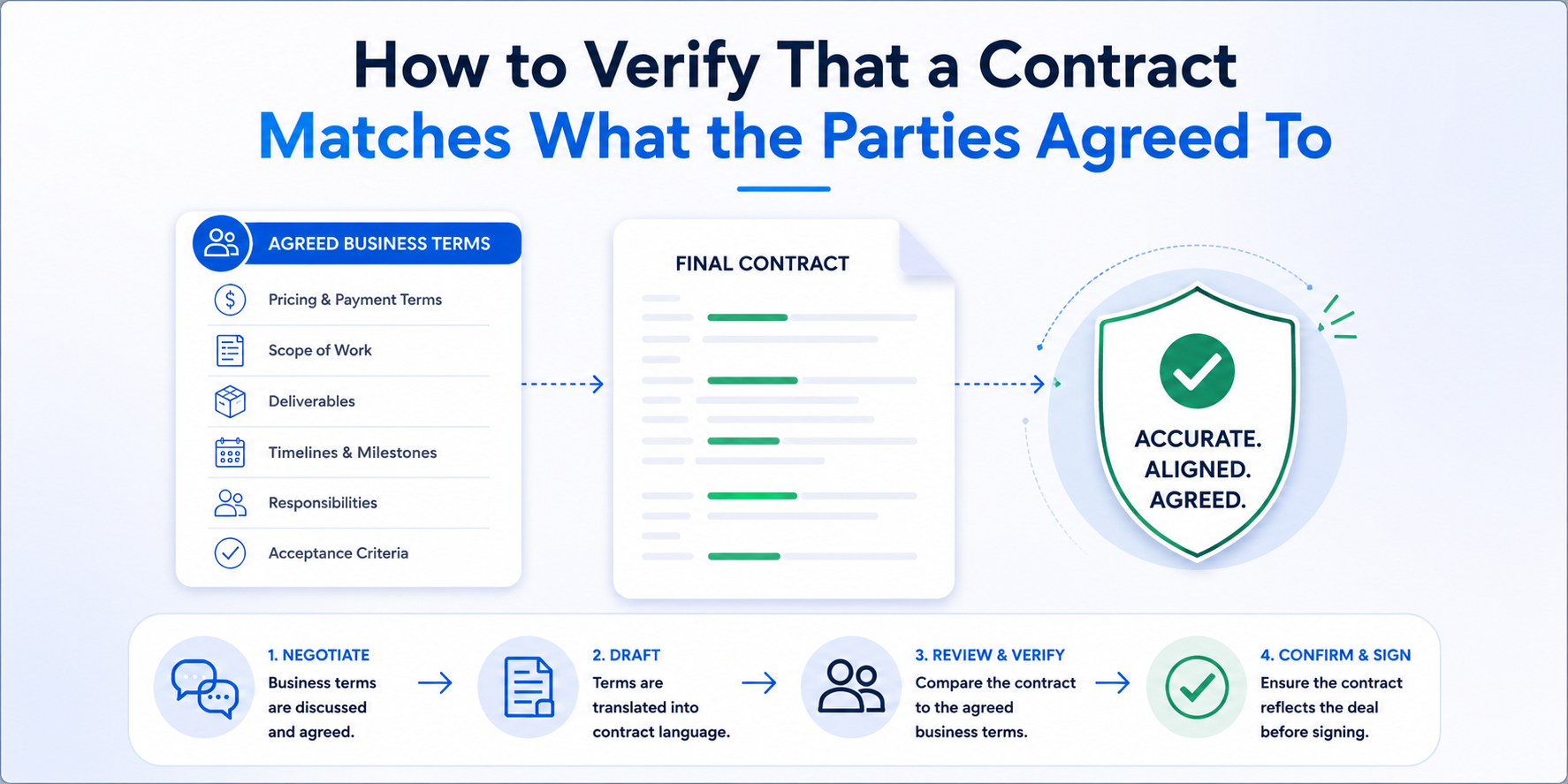
The parties begin negotiating based on conversations, emails, or high-level verbal alignment without documenting the key business terms early. Instead of agreeing on core points such as pricing structure, scope, timelines, and responsibilities up front, they move directly into drafting and redlining a full contract. There is often an assumption that “we’re aligned” based on initial discussions, so a term sheet or written summary feels unnecessary or overly formal.
Why It Becomes a Problem
Without early written alignment, the contract becomes the first place where differences surface. Business terms that seemed clear in conversation may turn out to be interpreted differently by each side. As a result, negotiation shifts into the document itself, leading to extensive redlines, longer turnaround times, and repeated back-and-forth on issues that could have been resolved earlier. This can slow down the deal significantly and create friction, especially when stakeholders believe previously resolved points are being reopened or changed.
How to Avoid It
Document key business terms before moving into full contract drafting. This can be done through a term sheet, deal summary, or even a structured email that captures the main points. Align on core elements such as pricing, scope, timelines, and responsibilities before legal drafting begins. This reduces ambiguity, shortens negotiation cycles, and allows the contract to reflect agreed terms rather than serve as the primary negotiation tool.

Unclear Deal Structure
How It Happens
The parties move forward with a deal without clearly defining how the arrangement is supposed to work at a structural level. Key elements such as pricing model, scope boundaries, deliverables, or responsibilities may be discussed in general terms but not fully thought through. For example, one party may assume a fixed-fee arrangement while the other expects usage-based pricing, or both sides may have different assumptions about what is included in the scope versus what would require additional work.
Why It Becomes a Problem
When the deal structure is unclear, lawyers are forced to reverse-engineer the arrangement during drafting. This often leads to inconsistent or contradictory provisions, as different sections of the contract try to reflect assumptions that were never fully aligned. For example, the pricing clause may suggest one model while the scope or change management provisions imply another. This creates confusion during negotiation, increases redlining, and raises the risk of gaps or inconsistencies that can cause disputes later.
How to Avoid It
Define the core structure of the deal before drafting begins. Clearly align on pricing model, scope boundaries, deliverables, and each party’s responsibilities. Make sure these elements are internally consistent and understood by both sides. Even a high-level written summary can help ensure that the contract reflects a coherent structure rather than trying to reconcile competing assumptions after the fact.
Misaligned Expectations Between Stakeholders
How It Happens
Different stakeholders within or representing the same organization approach the deal with different priorities, but those differences are not surfaced early. Sales may focus on closing quickly, Finance may focus on pricing and margins, and the legal team may focus on risk and enforceability. These groups often operate in parallel rather than in coordination, with limited communication before negotiations begin. As a result, internal alignment is assumed rather than confirmed. For example, a sales team may present terms to a counterparty that have not been vetted by the legal or finance teams for compliance with company standards.
Why It Becomes a Problem
When internal expectations are not aligned, those disagreements tend to surface during negotiation with the counterparty. This can lead to inconsistent messaging, delayed responses, or last-minute changes to previously discussed terms. It also creates friction both internally and externally, as the counterparty may feel that the deal is being renegotiated unexpectedly. In some cases, this can undermine credibility or slow the deal significantly as internal stakeholders work through issues that should have been resolved earlier.
How to Avoid It
Align key stakeholders internally before engaging in detailed negotiations with the counterparty. Confirm agreement on core business terms, risk tolerance, and any constraints that may affect the deal. Establish a clear internal point of ownership for the negotiation and ensure that communication between teams is consistent. Even a brief internal alignment step at the outset can prevent confusion, delays, and rework later in the process.
Treating the Contract as a Formality
How It Happens
The contract is treated as a routine step at the end of the deal rather than a meaningful part of structuring the relationship. One or both parties may assume that a “standard contract” will be sufficient, or that any issues can be cleaned up later if needed. This mindset often leads to shortcuts during drafting and review, with less attention paid to how the agreement will actually operate in practice. For example, a client working with outside counsel may push to finalize a document quickly using a template, assuming that the details are largely boilerplate and not worth extended discussion.
Why It Becomes a Problem
When the contract is treated as a formality, rather than a substantive document with tangible business implications, important details are often overlooked. Operational clauses, timelines, responsibilities, and edge cases may not be fully considered or tailored to the specific deal. This can lead to ambiguity once the agreement is in effect, especially when something goes wrong or falls outside the expected path. In a law firm context, this may also create issues for clients if a contract that was assumed to be “standard” fails to reflect the actual business arrangement or exposes the client to avoidable risk.
How to Avoid It
Approach the contract as a tool that defines how the relationship will function, not just a document to finalize the deal. Take the time to review and tailor key provisions, especially those that affect day-to-day operations and risk allocation. For legal teams, this means ensuring that templates are adapted to the specific transaction rather than used as-is. For clients and business stakeholders, it means engaging with counsel on the substance of the agreement, not just the timing. Treating the contract thoughtfully up front reduces the likelihood of disputes and rework later.
Over-Optimizing for Speed in the Short Term
How It Happens
In an effort to close deals quickly, parties may prioritize speed over clarity and alignment. Key steps including internal discussions, documenting business terms, or fully defining the deal structure are skipped or compressed. Teams may move straight into drafting or accept high-level agreement on terms without working through the details. For example, a deal team might agree to proceed based on a quick call or email exchange, with the assumption that the contract can be finalized rapidly afterward.
Why It Becomes a Problem
While this approach may create short-term momentum, it often introduces ambiguity that slows things down later. Unclear or incomplete terms tend to surface during contract negotiation, leading to extended redlining, rework, and internal back-and-forth. In some cases, issues are not caught during negotiation and instead emerge after the agreement is signed, creating operational challenges or disputes. Pushing risk or ambiguity downstream rarely eliminates it; it simply shifts when and how it needs to be addressed, often at a higher cost.
How to Avoid It
Balance speed with upfront alignment. Take the time to clarify key terms, responsibilities, and assumptions before moving into detailed drafting. Even a short alignment step or written summary can prevent more significant delays later. Focus on resolving structural issues early rather than deferring them. Moving quickly is important, but moving clearly is what ultimately keeps deals on track.
Conclusion
Many contract negotiation issues are not caused by difficult counterparties or complex legal questions. They stem from preventable mistakes in how deals are structured, aligned, and communicated from the outset. Looping in the legal team too late, skipping written documentation, or prioritizing speed over alignment can all create friction that slows deals down and increases risk.
Addressing these issues early leads to smoother negotiations, clearer agreements, and fewer surprises once the contract is in effect. A small amount of upfront communication often saves significant time and effort later in the process.
If you’re looking to streamline the rote parts of contract drafting and review so you can focus on the substance of negotiation, schedule a demo of BoostDraft to see how it helps teams like yours make contract work more efficient directly inside Microsoft Word.
Recent Post