Blog
06/12/2026
Most lawyers review the latest redline during contract negotiation. That review is essential, but it only answers one question: what changed from the prior draft?
It does not necessarily reveal what changed from the original template, which standard positions were negotiated away, which fallback positions were accepted, or whether the final agreement still reflects the organization's preferred terms and policies.
Reviewing a redline and reviewing for deviations are not the same thing. A redline shows recent changes. A deviation review helps determine whether the contract still reflects the standards that existed before negotiation began. Understanding the difference can help legal teams identify risk, apply policies more consistently, and avoid surprises before signature.
In this article, we'll cover:
- The difference between redline review and deviation review
- Why deviations become harder to track over multiple negotiation rounds
- The types of deviations most likely to create risk
- How to compare contracts against templates effectively
- The role of playbooks and policies in evaluating deviations
- How technology can help identify deviations at scale
- The importance of keeping humans in the loop
Redlines Show Changes Between Drafts, Not Deviations from Standards
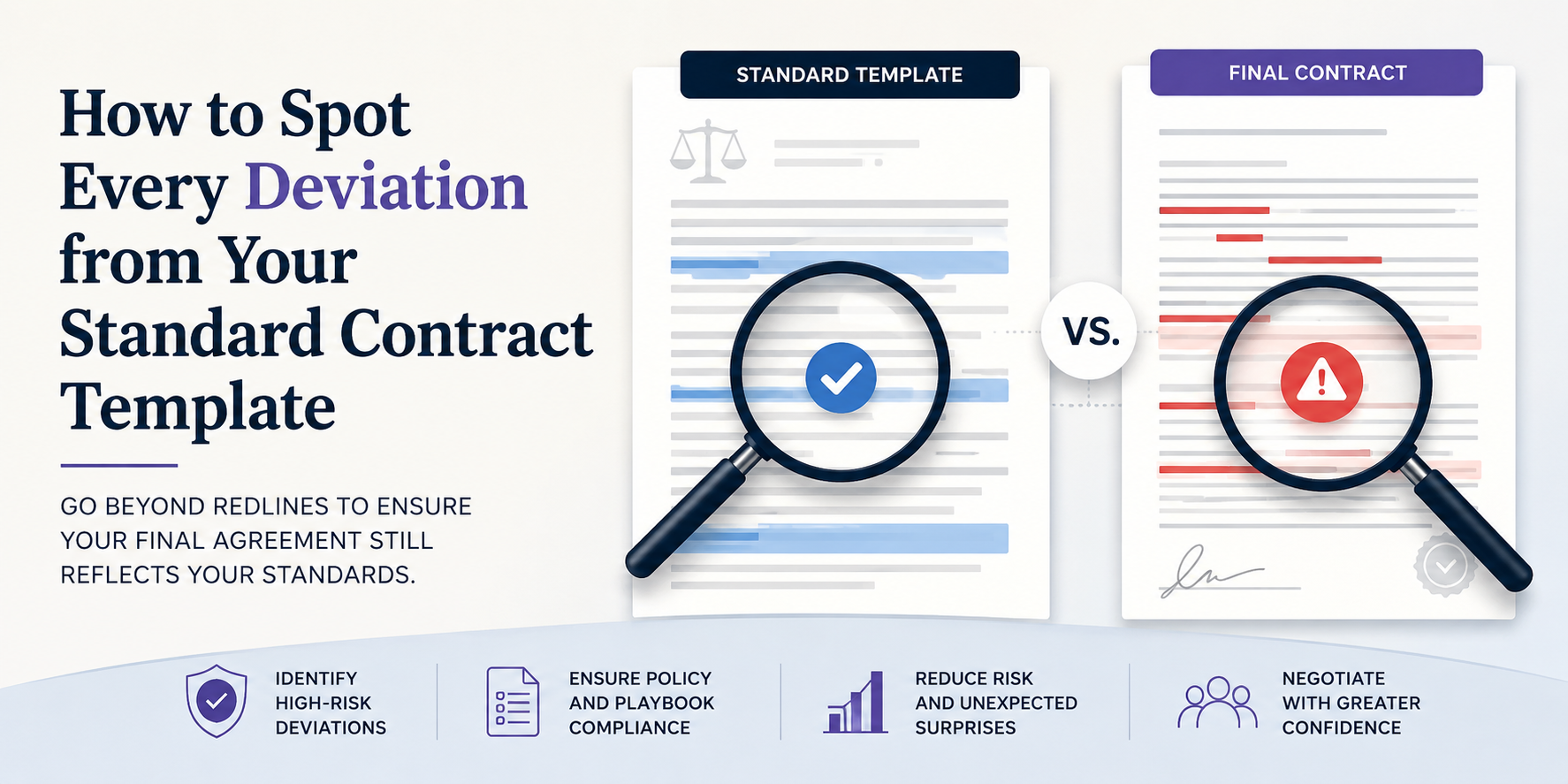
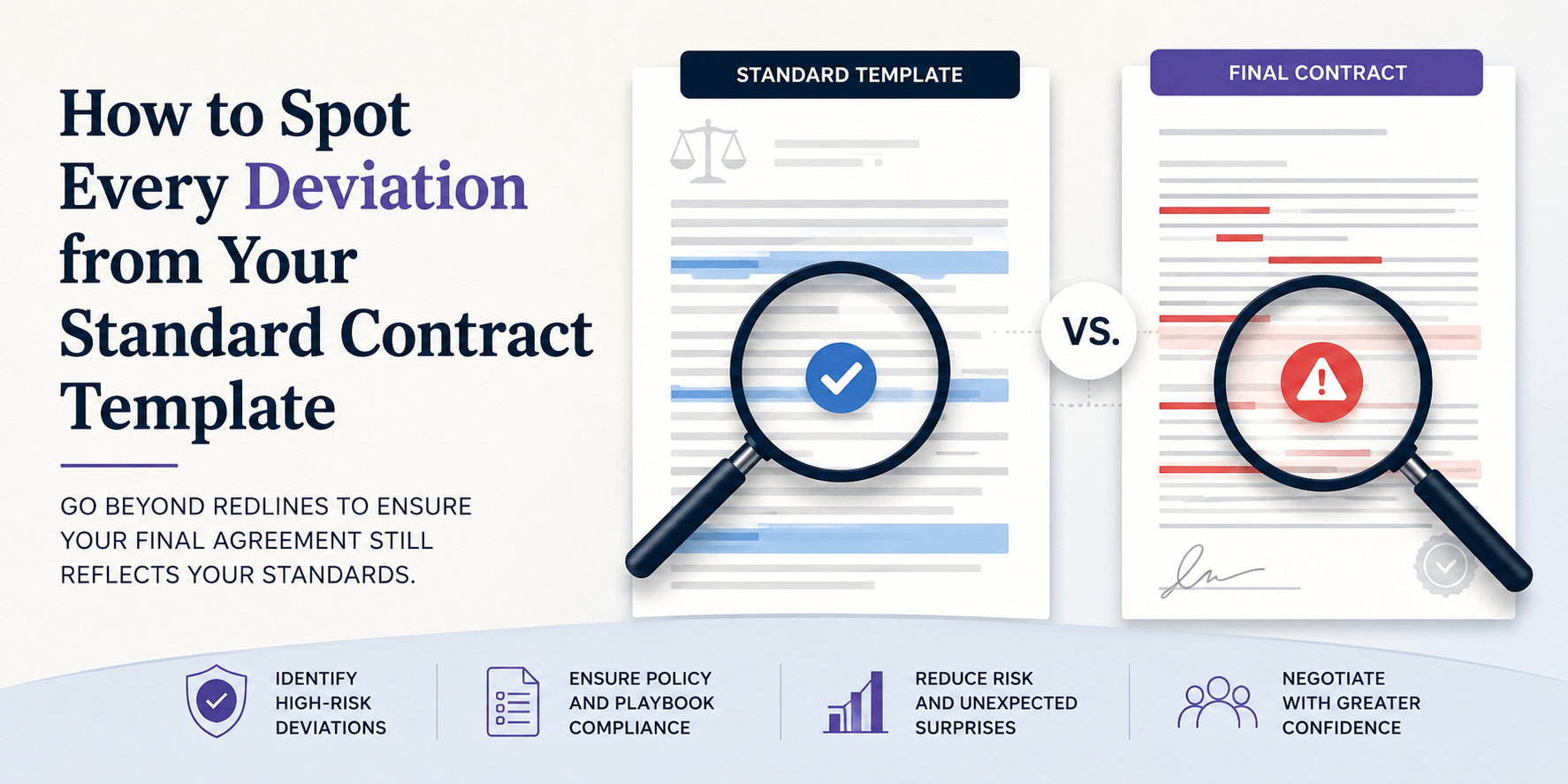
When lawyers review a redline, they are typically comparing one draft against another. That comparison is useful because it shows what changed during the most recent round of negotiation. However, it does not answer a different and often more important question: how far has the agreement moved from the organization's approved starting position?
Those are two distinct comparisons. A redline compares draft A to draft B. A deviation review compares the current draft to the original template, playbook, or approved language. While a redline highlights recent edits, it does not necessarily reveal the cumulative effect of changes made over multiple negotiation rounds. A particular clause may have evolved gradually across several drafts in response to stakeholder requests and the back and forth of negotiation. Each individual change may have appeared reasonable at the time, but the final provision may differ substantially from the organization's standard position. Looking only at the latest redline makes it difficult to see that broader shift.
Effective contract review requires both perspectives. Reviewing redlines helps negotiators understand what changed recently. Comparing the agreement against the original template, however, helps them determine whether the final contract still reflects their organization's preferred terms and risk positions.
Deviations Become Harder to Track Across Multiple Negotiation Rounds
Tracking deviations becomes increasingly difficult as negotiations progress. During the first few rounds of review, most changes are easy to identify and evaluate. By the fifth or sixth draft, however, the contract often reflects weeks of revisions, discussions, compromises, and incremental edits spread across multiple versions.
Some issues may have been resolved several drafts ago and are no longer visible in the latest redline. Language may have been moved to a different section of the agreement. A provision may have been rewritten rather than deleted outright, making the change less obvious. In other cases, fallback language may have been inserted during negotiations and gradually accepted without further discussion.
As a result, reviewers often remember the negotiation process better than the document itself. They remember conversations, open issues, and key concessions, but not necessarily where every negotiated change ultimately landed in the contract.
This creates a significant risk during final review. The agreement may have drifted substantially from the original template even though no individual round of redlining appeared particularly significant. Comparing the final draft against the original template helps reviewers identify those accumulated deviations before the contract is signed.

The Highest-Risk Deviations Are Often Small
When legal teams think about contract deviations, they often focus on major revisions: entirely new clauses, significant changes to liability provisions, or heavily negotiated commercial terms. In practice, some of the most consequential deviations are much smaller.
A single liability carve-out can dramatically expand a party's exposure. A revised notice provision can change how contractual rights are exercised. Small adjustments to approval rights, audit rights, payment timelines, or renewal language can alter operational responsibilities and business outcomes in ways that are easy to overlook during a busy negotiation.
These changes are particularly risky because they often appear reasonable in isolation. A reviewer may focus on larger open issues while assuming that a minor wording change elsewhere is inconsequential. Over multiple negotiation rounds, these small adjustments can accumulate and materially alter the balance of the agreement.
This is one reason why reviewing only the latest redline is not always sufficient. The most important deviations are not necessarily the most visible ones. Effective contract review requires understanding not just what changed, but how those changes affect the operation of the agreement compared to the organization's original position.
Compare Against the Template, Not Just the Prior Draft
Most contract review rounds focus on comparing the current draft against the immediately preceding version. Lawyers review the redline, evaluate the latest changes, and decide whether to accept, reject, or revise them. That process is necessary, but not always sufficient on its own.
A comparison between version five and version six tells you what changed most recently. It does not necessarily tell you how far the agreement has moved from the organization's approved starting position. After multiple rounds of negotiation, the more important comparison is often between the final draft and the original template.
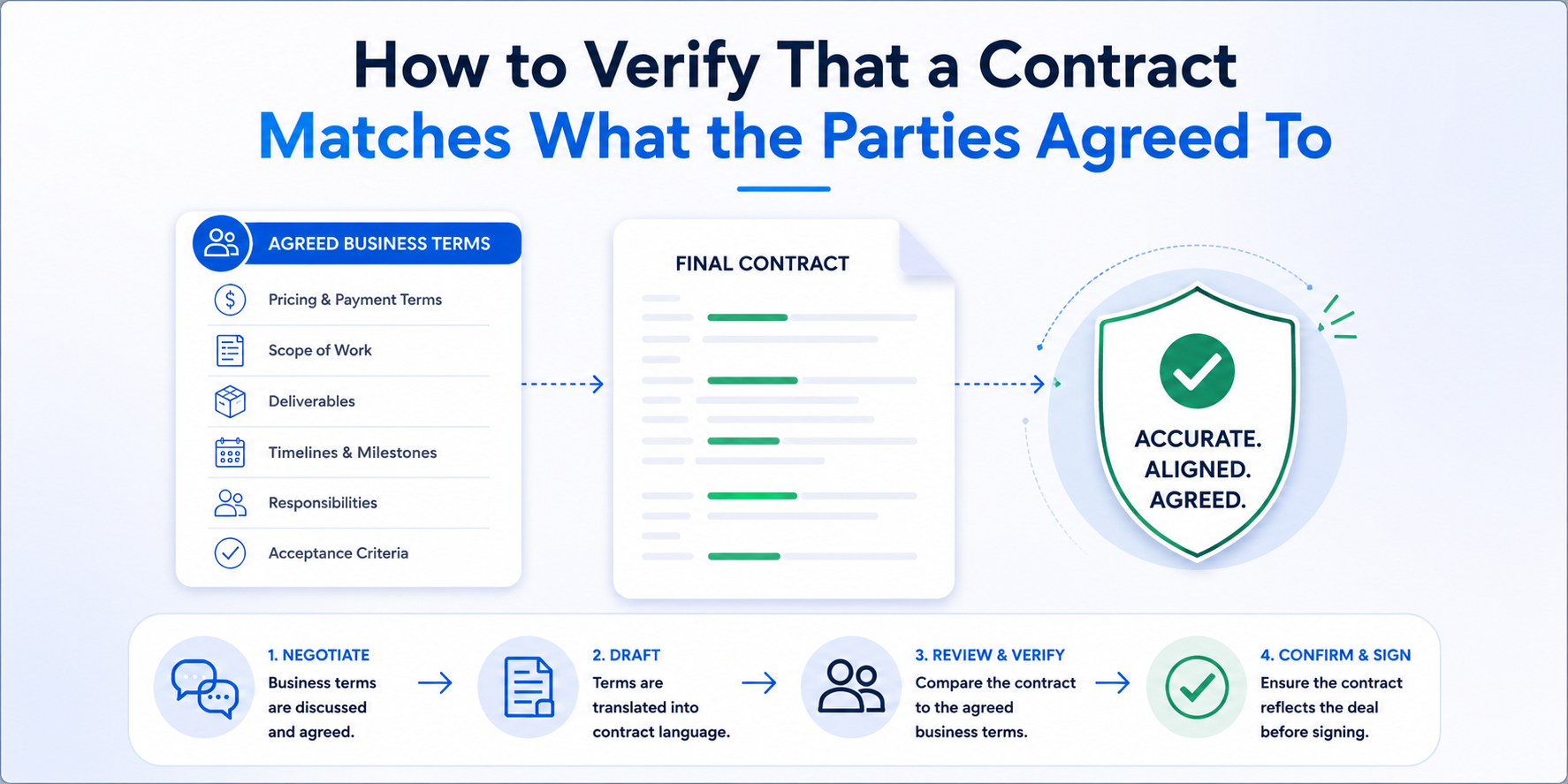
This broader comparison helps answer questions that a traditional redline can’t. Which standard positions remain intact? Which provisions were negotiated away? Which fallback positions were accepted? Which clauses now differ materially from the organization's preferred language? Viewed this way, template comparison becomes a form of verification. It allows legal teams to confirm that the final agreement still reflects approved standards and risk positions before signature.
Use Playbooks and Policies to Determine Whether Deviations Matter
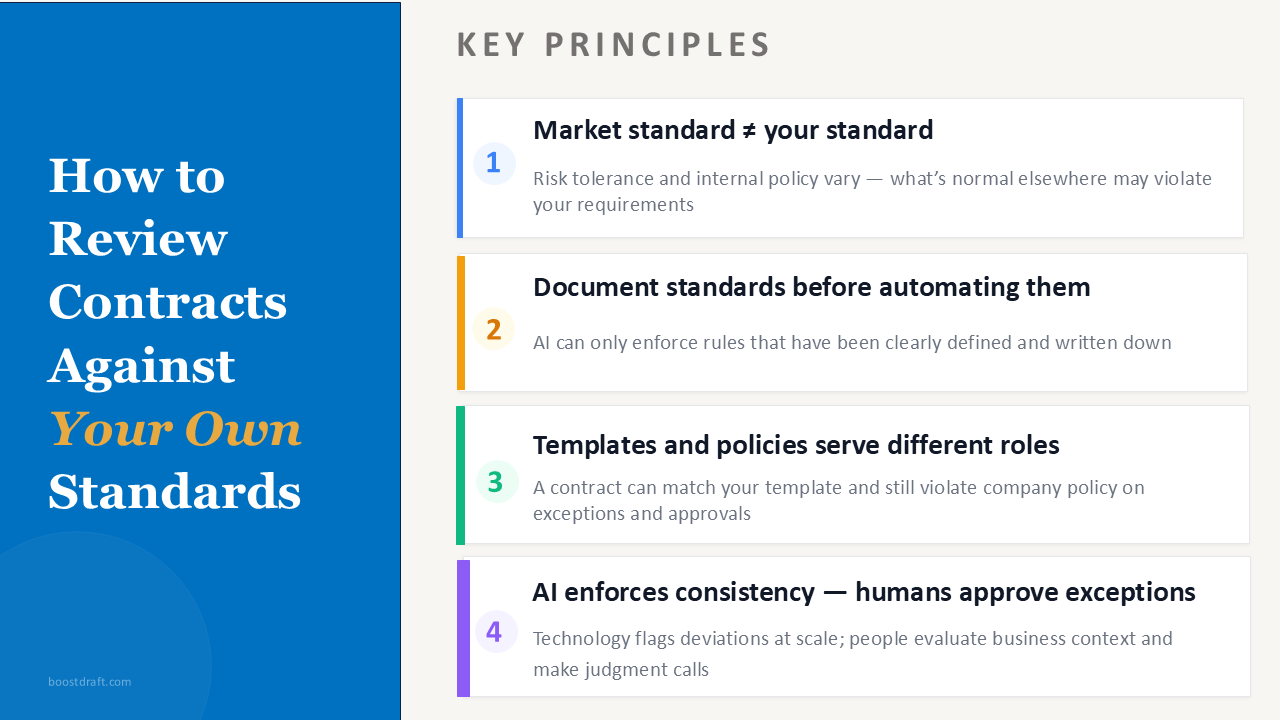
Not every deviation from a template is a problem. Contract negotiation exists because parties rarely sign agreements without changes. The goal of deviation review is not to eliminate all differences from the template, but rather to identify which differences require attention and which fall within acceptable parameters.
For example, a limitation-of-liability clause may differ from the organization's preferred language but still reflect an approved fallback position documented in a negotiation playbook. Conversely, a seemingly minor change to an indemnification provision might require escalation because it falls outside approved guidelines. Looking at the deviation alone is not enough. Reviewers also need to understand the organization's policies, approval requirements, and negotiation framework.
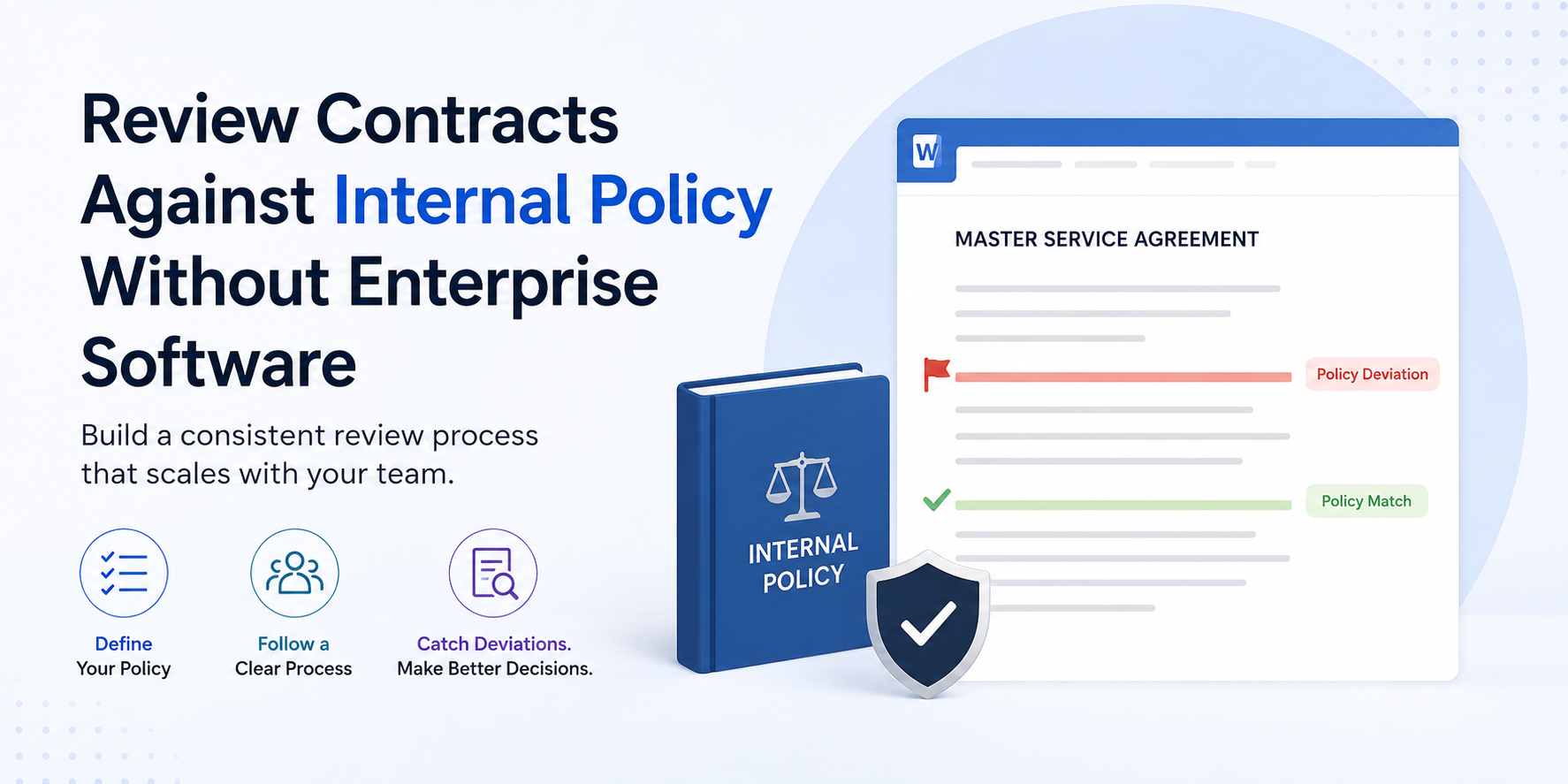
This is where playbooks and internal policies become critical. When reviewing deviations, legal teams should ask questions such as:
- Is this an approved fallback position?
- Does this change require escalation or additional approval?
- Is this an acceptable exception given the circumstances of the deal?
Those questions help distinguish acceptable negotiated outcomes from deviations that create unexpected risk or fall outside company standards.
Technology Can Help Surface Deviations at Scale
As contract volume increases, manually identifying every deviation from a template becomes increasingly difficult. Reviewers must track changes across multiple drafts, compare language against approved standards, and determine whether negotiated provisions remain within acceptable boundaries. Technology cannot replace legal judgment, but it can make the verification process significantly more efficient.
Specialized contract review tools can help legal teams:
- Compare contracts against approved templates
- Compare multiple versions of a document
- Identify deviations from standard language
- Surface negotiated changes across drafting rounds
- Check agreements against established standards
- Reduce manual review effort and rework
The value of these tools lies in visibility rather than decision-making. By making deviations easier to identify and review, technology helps legal teams focus their attention where it matters most. Instead of spending time manually searching for changes, reviewers can spend more time evaluating risk, applying business judgment, and determining whether deviations should be accepted, escalated, or revised before the agreement is finalized.
Human Review Still Determines Whether to Accept the Change
Technology can help identify deviations, exceptions, and negotiated changes, but it cannot determine whether those changes are appropriate in the context of a particular deal. A deviation from the template is not necessarily a mistake. It may reflect an approved fallback position, a commercially necessary compromise, or a deliberate business decision. Determining which of those explanations applies requires judgment that extends beyond the language of the contract itself.
For example, a legal team may accept a non-standard liability provision for a strategic customer, approve modified payment terms to accelerate revenue, or permit additional obligations in exchange for other concessions. In each case, the relevant question is not simply whether the contract differs from the template, but whether the deviation has been evaluated appropriately and accepted by the right stakeholders. Reviewers must assess the legal risk, business rationale, and approval requirements before deciding whether a change should remain in the agreement.
Technology can help identify the differences. People remain responsible for deciding whether those differences are acceptable.
Conclusion
Reviewing the latest redline tells you what changed most recently. Comparing the final agreement against your template tells you whether the contract still reflects your organization's standards.
That distinction becomes increasingly important as negotiations grow more complex and contracts pass through multiple rounds of revision. Small deviations can accumulate over time, approved language can be negotiated away, and fallback positions can become difficult to track. Without comparing the final agreement against the original template, it can be difficult to determine where the contract ultimately ended up.
The most effective review processes combine redline review, template comparison, clear playbooks, and human judgment. Together, these tools and processes help legal teams identify meaningful deviations, apply organizational standards consistently, and make informed decisions about risk.
If your team needs a more efficient way to compare contracts against templates, identify deviations, and review negotiated changes, schedule a demo of BoostDraft to see how legal teams streamline contract review directly inside Microsoft Word.
Recent Post