Blog
06/12/2026
Many AI contract review tools evaluate agreements against generic legal principles, publicly available precedents, or broad notions of "market standard" language. That can be useful context, but it is not how most legal teams make decisions.
Organizations negotiate contracts based on their own policies, approved templates, fallback positions, risk tolerance, and business objectives. A clause that appears reasonable from a generic market perspective may still violate internal standards or require additional approvals.
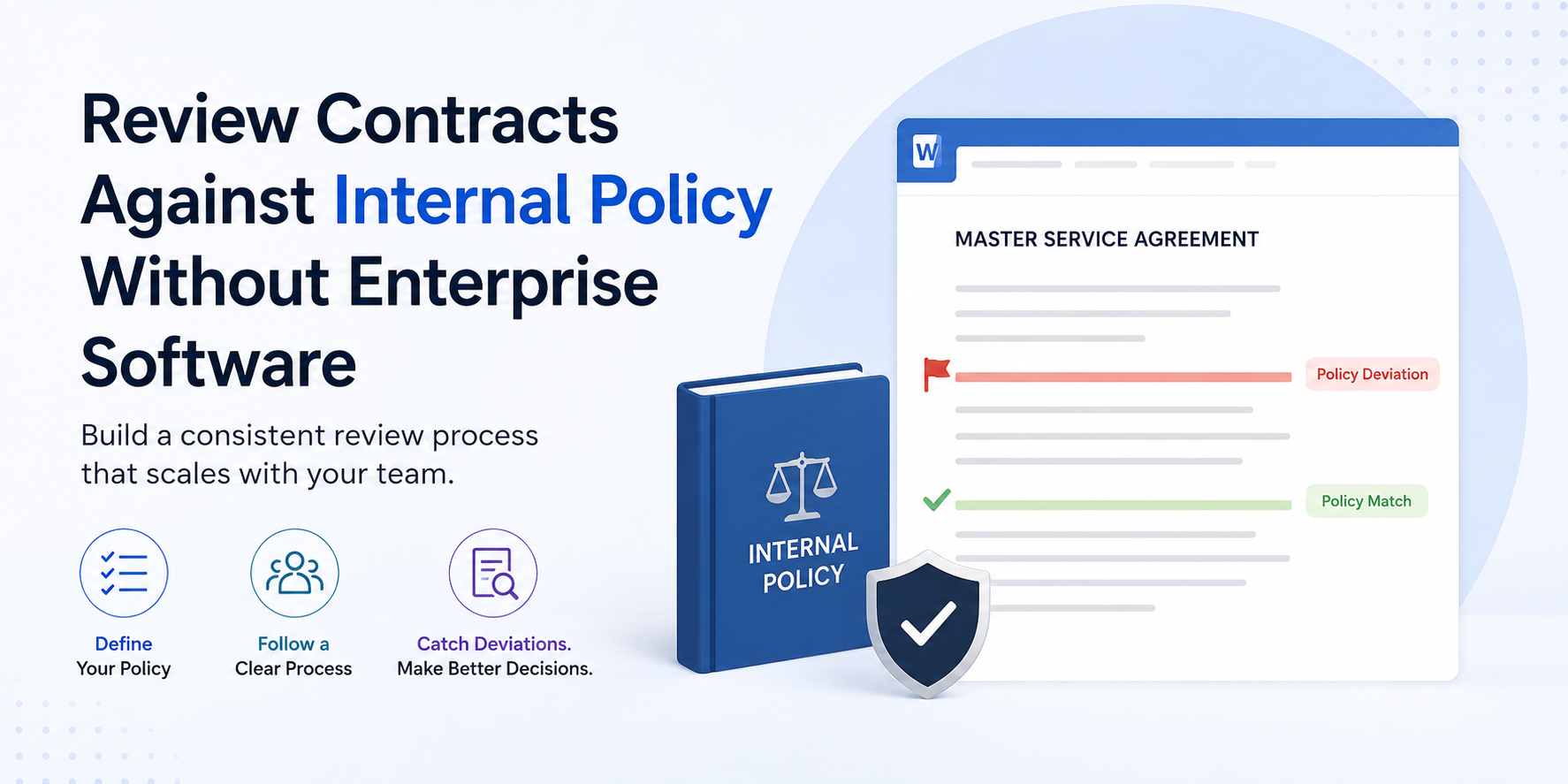
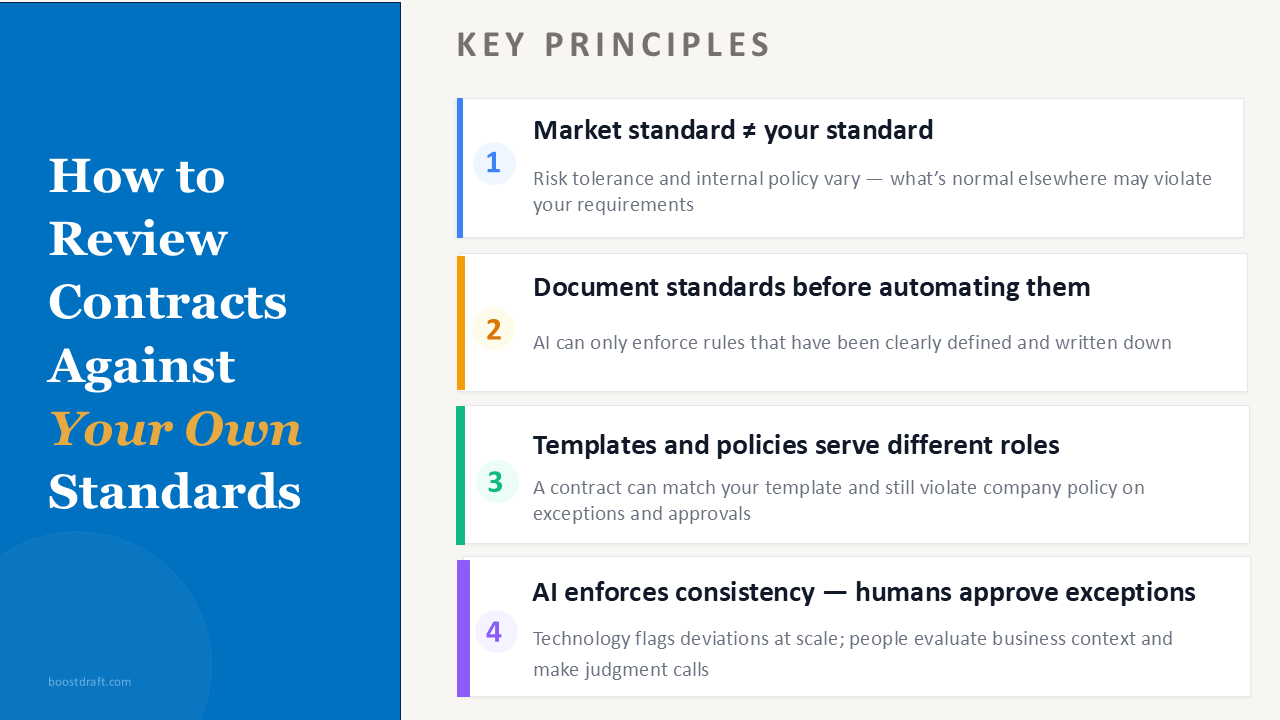
That distinction is critical. The key question during contract review is not whether a contract reflects market standards, but whether it complies with your organization's standards. The more effectively your negotiating team can define, document, and apply those standards, the more effectively you can use AI to support contract review.
Market Standard Is Not the Same as Company Standard
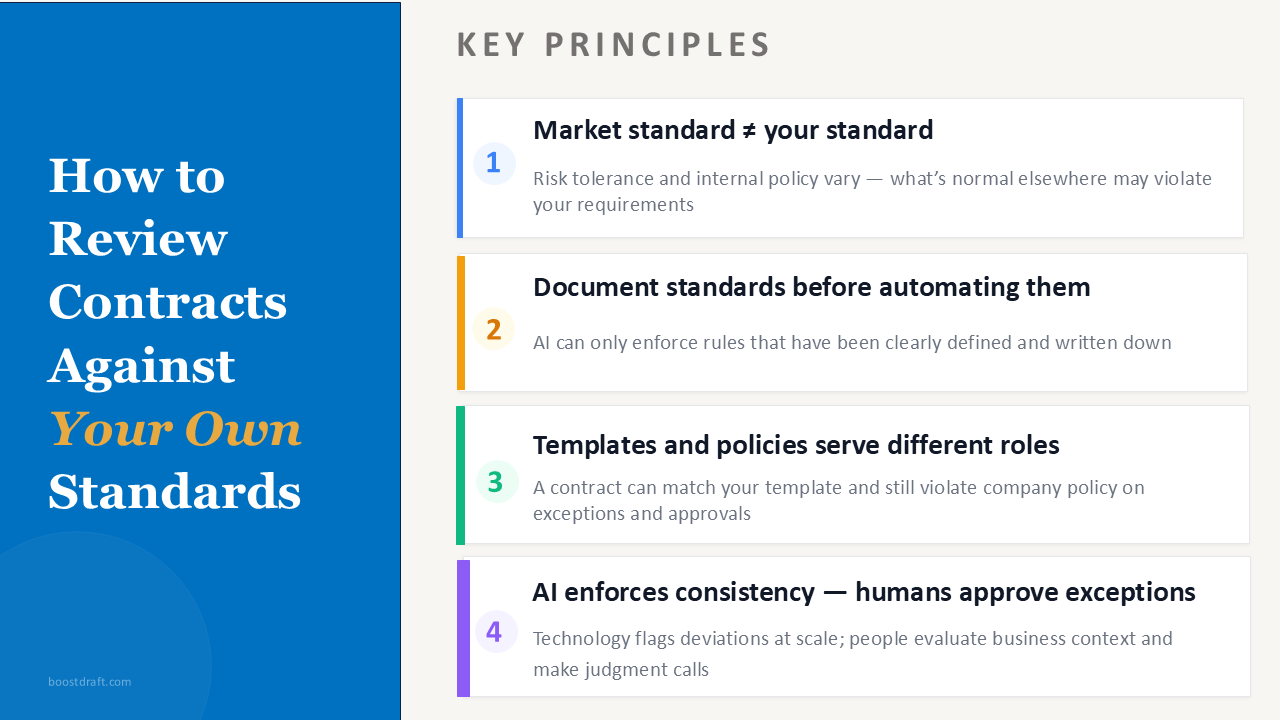
One of the biggest misconceptions in contract review is that there is a single "market standard" position for every issue. In reality, different organizations intentionally take different positions based on their business goals, risk tolerance, and negotiating leverage. A clause that is entirely acceptable for one company may be unacceptable for another.
Contract positions are often shaped by factors such as:
- Risk tolerance
- Industry
- Bargaining power
- Regulatory requirements
- Business objectives
For example, a rapidly growing startup may be willing to accept more contractual risk in exchange for closing deals quickly, while a large enterprise may prioritize consistency and risk control. A supplier may approach liability, indemnification, and payment terms differently than a customer. Similarly, organizations operating in highly regulated industries often adopt stricter contract standards than companies facing fewer regulatory obligations.
This distinction matters because AI tools frequently evaluate contract language against generalized benchmarks, common drafting practices, or broad notions of market norms. While that context can be useful, it does not necessarily reflect your organization's policies. A limitation-of-liability clause that appears reasonable from a generic market perspective may still violate internal requirements or approval policies. Effective contract review therefore requires more than identifying what is common in the market. It requires understanding what is acceptable for your organization.
Internal Standards Often Exist But Are Hard to Find
Most legal teams already have contract standards. The challenge is usually not creating them, but rather finding them, maintaining them, and applying them consistently.
Internal standards often live in a variety of places, including:
- Templates
- Playbooks
- Fallback language libraries
- Approval policies and matrices
- Prior negotiations
- Email guidance
- Institutional knowledge
Over time, these resources tend to accumulate across different systems, folders, and individuals. A legal team may have an approved template stored in one location, a negotiation playbook stored in another, and important guidance documented only in email chains or remembered by experienced team members. Different lawyers may also develop their own approaches to recurring issues based on past negotiations.
As a result, organizations often have standards without having a single, authoritative source of truth. Reviewers may struggle to determine which template is current, which fallback position is approved, or whether a particular deviation requires escalation. New team members face an even greater challenge because much of the organization's knowledge may exist only in the experience of more senior colleagues.
Before AI can help enforce internal standards, those standards need to be accessible, organized, and consistently maintained. Otherwise, the technology may simply amplify existing inconsistencies rather than reduce them.
Document Your Standards Before Automating Them
Many legal teams want AI tools to identify deviations from company policy, recommend fallback language, or escalate risky provisions automatically. However, AI cannot reliably enforce standards that have never been clearly defined.
Before automating contract review, document the standards you want reviewers and technology to apply. These may include:
- Preferred clause language
- Approved fallback positions
- Escalation triggers
- Approval thresholds
- Prohibited clauses or provisions
For example, your organization may permit certain liability caps, require executive approval for non-standard payment terms, or prohibit specific indemnity obligations altogether. If those rules exist only in the heads of experienced lawyers, neither new team members nor AI tools can apply them consistently.
This reflects a broader principle that applies to legal operations generally: standardization should come before automation. Technology can help enforce policies, but it cannot create them. An AI review tool may be able to identify deviations from approved language or flag provisions that require escalation, but only if the underlying standards have been documented clearly enough for both humans and technology to follow.
The more precise and structured your standards are, the more effectively they can support consistent contract review across teams, matters, and jurisdictions.
Make Standards Easy to Access During Review
Documenting contract standards is an important first step, but documentation alone does not create consistency. If reviewers cannot easily find and apply those standards during drafting and negotiation, they are unlikely to use them consistently.
Many legal teams store guidance in shared drives, PDF playbooks, precedent folders, or internal knowledge repositories. While these resources can be valuable, they often require reviewers to stop what they are doing, search for the relevant guidance, and determine whether it still applies. Under time pressure, many users will rely on memory, prior practice, or the language already in front of them instead.
That is why knowledge management and workflow design matter as much as documentation itself. The most effective contract review processes make standards accessible at the moment decisions are being made. Reviewers should be able to see approved language, fallback positions, escalation requirements, and related guidance within their normal drafting and review workflow rather than searching for it separately.
A playbook that sits unused in a folder is not an operational standard. To enforce consistent contract review practices, legal teams need to integrate institutional knowledge into the day-to-day review process so that the right guidance is available when it is needed.
Review Contracts Against Policies, Not Just Templates
Many legal teams treat templates and policies as interchangeable. They are closely related, but they serve different purposes.
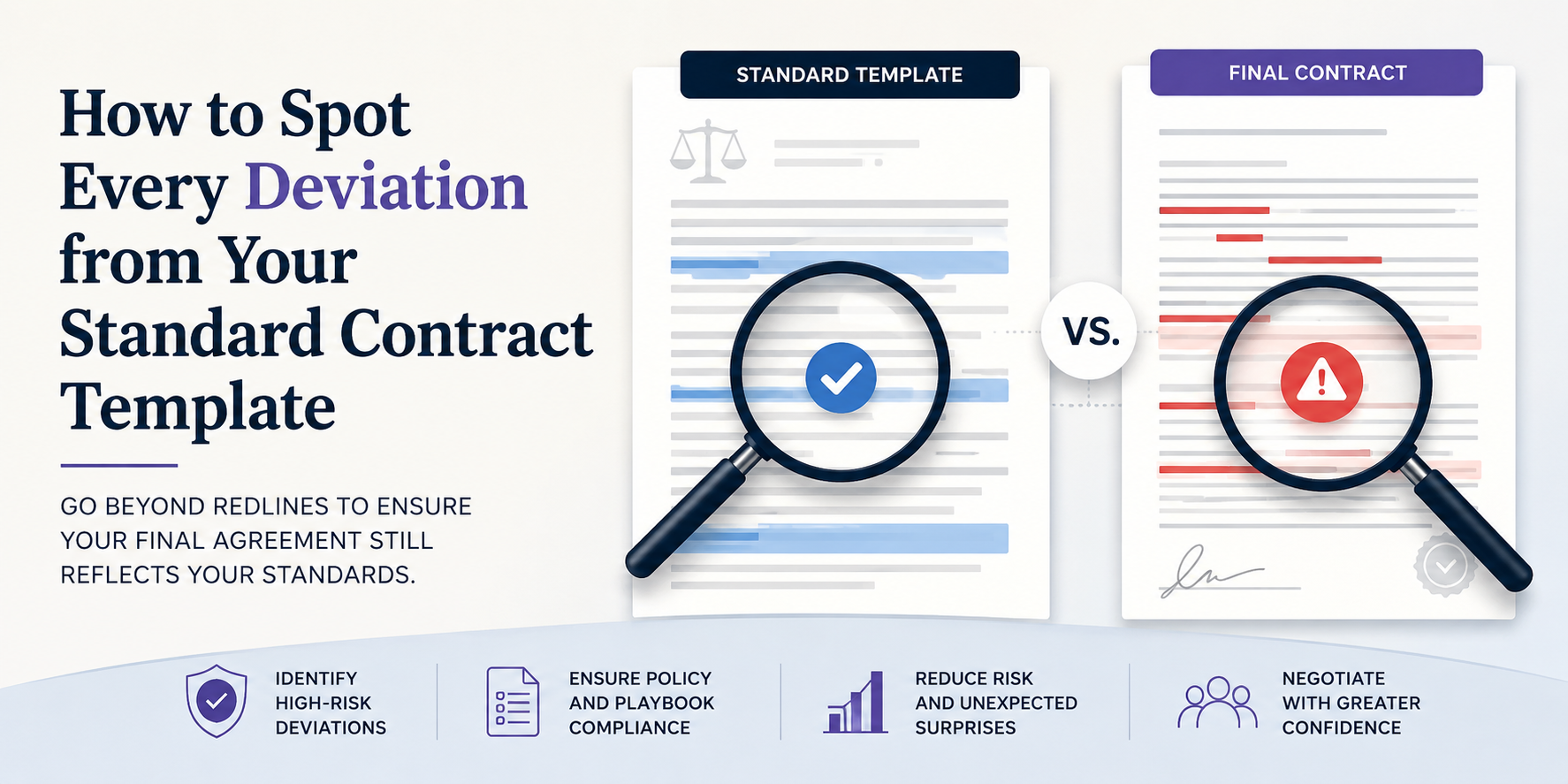
A template provides approved language for a particular situation. A policy defines the rules that govern when language is acceptable, when exceptions require approval, and how to manage risk. As a result, a contract can comply with the template while still violating company policy.
Consider a limitation-of-liability clause. A template may contain a standard liability cap tied to fees paid under the agreement. However, the organization's policy may go further by requiring general counsel approval whenever liability is uncapped or certain categories of damages are excluded from the cap.
The template establishes a preferred starting position. The policy determines what happens when negotiations move away from that position.
This distinction becomes especially important when using AI-assisted contract review. Comparing an agreement against a template can identify deviations from approved language, but it does not necessarily identify whether those deviations require escalation, approval, or further review. Those decisions depend on policy.
Effective contract review therefore requires both. Templates help create consistency in drafting. Policies provide the governance framework that determines how exceptions are handled. Legal teams that understand the difference are better positioned to review contracts in a way that reflects both legal standards and business objectives.
Choose AI Tools That Support Your Standards
Not all AI contract review tools are designed to enforce organization-specific standards. Many focus on identifying general drafting issues, comparing clauses to broad market norms, or suggesting language based on publicly available examples. Those capabilities can be useful, but they do not necessarily help legal teams apply their own policies consistently.
When evaluating AI contract review tools, ask questions such as:
- Can the tool use our templates?
- Can it reference our playbooks?
- Can it compare language against approved standards?
- Can it identify deviations from preferred language?
- Can it apply organization-specific guidance?
- Can it support escalation and approval workflows?
These capabilities become increasingly important as legal teams mature their contract review processes. The goal is not simply to identify what is unusual or non-standard relative to the market, but to identify what differs from your organization's preferred positions and determine whether those differences require action.
This is one reason many legal teams are moving beyond generic AI tools and looking for solutions designed specifically for legal workflows. The more closely a tool can align with your templates, playbooks, policies, and review processes, the more effectively it can support consistent contract review. Technology should reinforce your standards, not replace them with someone else's.
AI Can Enforce Standards, but Humans Approve Exceptions
Even the most sophisticated contract review process cannot be reduced entirely to rules. Organizations create standards to promote consistency, but contract negotiations inevitably involve exceptions, tradeoffs, and business judgment.
A contract may deviate from a preferred position for perfectly valid reasons. A strategic customer may require non-standard commercial terms. A key supplier may have leverage that limits negotiation flexibility. A business team may decide that accepting additional risk is justified by the value of the opportunity. In each case, the question is not whether the contract complies perfectly with the standard, but whether the deviation is understood, evaluated, and approved appropriately.
This is where AI and human judgment serve different functions. AI can help identify deviations from approved language, surface potential issues, and apply documented review standards consistently across large volumes of agreements. What it cannot do is determine whether a particular exception makes sense in the context of a specific business relationship, negotiation strategy, or commercial objective.
The strongest contract review processes therefore use technology to improve consistency while preserving human oversight for decisions that require judgment. Standards create a framework for decision-making, but people remain responsible for deciding when an exception is worth making.
Conclusion
Market standards can provide useful context, but they are not a substitute for your organization's policies, risk tolerance, and business objectives. Effective contract review is not about determining whether a clause looks broadly acceptable, but rather about determining whether the agreement aligns with your standards and identifying when exceptions require additional review or approval.
That is why successful AI-assisted contract review starts with operational discipline. Legal teams need clearly documented standards, accessible guidance, consistent workflows, and technology that can apply organization-specific rules rather than relying solely on generic benchmarks.
The most effective review processes combine all of these elements. AI can help identify deviations, surface issues, and enforce consistency at scale. Human reviewers remain responsible for evaluating business context, balancing competing priorities, and approving exceptions when appropriate.
If your team is looking to review contracts against its own templates and policies, schedule a demo of BoostDraft to see how legal teams standardize contract review and apply organization-specific guidance directly inside Microsoft Word.
Recent Post