Blog
05/14/2026
In previous posts, we looked at common contract negotiation mistakes made by business teams and lawyers. Those issues often affect how deals are structured, negotiated, and prioritized. But even when the business terms are aligned and the lawyers are negotiating effectively, operational breakdowns can still slow deals down.
Many contract negotiations become inefficient not because the parties disagree on substance, but because the process itself breaks down. Ownership becomes unclear, approvals stall, drafts become fragmented, and communication loses coordination across teams and systems. Even well-structured deals can become difficult to close when negotiation workflows are poorly managed.
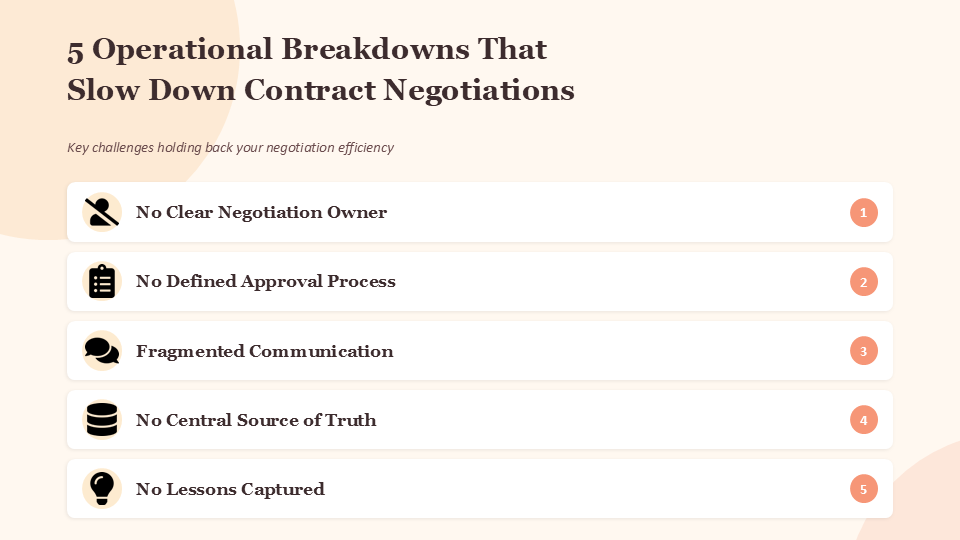
In this post, we look at five common operational breakdowns that create unnecessary friction during contract negotiations and how legal teams can avoid them.
No Clear Negotiation Owner
How It Breaks Down
Contract negotiations often involve multiple stakeholders across legal, finance, procurement, outside counsel, and other teams. Problems arise when no single person clearly owns the process. Different stakeholders communicate with the counterparty independently, feedback comes in through separate channels, and no one consistently tracks timelines or consolidates revisions. For example, a business team may discuss commercial points directly with the counterparty while legal negotiates the draft separately, resulting in disconnected conversations and conflicting expectations.
Why It Becomes a Problem
When ownership is unclear, negotiations slow down. Feedback becomes fragmented, responses take longer, and issues fall through the cracks. Counterparties may receive inconsistent messaging about priorities or agreed terms, creating confusion and unnecessary friction. Internally, teams might duplicate work or wait on approvals without knowing who is responsible for moving the process forward. Even relatively straightforward negotiations can become difficult to manage when nobody clearly owns the workflow.
How to Avoid It
Assign a clear negotiation process owner at the outset of the deal. That person should coordinate communication, consolidate feedback, track timelines, and ensure all stakeholders stay aligned throughout the process. Establishing a single point of coordination helps keep negotiations organized and reduces confusion both internally and with the counterparty.
No Defined Approval Process
How It Breaks Down
Contract negotiations often stall when organizations lack a clear process for internal review and approval. Drafts move between the legal team, business stakeholders, and leadership without a defined sequence or timeline for signoff. Stakeholders may become involved late in the process, raising new concerns after key terms have already been negotiated. In some cases, teams escalate issues for executive approval only after negotiations have largely concluded, creating last-minute delays and uncertainty.
Why It Becomes a Problem
Without a structured approval workflow, negotiations become unpredictable and difficult to manage. Counterparties may wait days for responses while internal stakeholders determine who needs to review or approve specific issues. Late-stage escalations can reopen previously resolved issues and create frustration on both sides. These bottlenecks slow deal timelines and make the negotiation process feel disorganized, even when the substantive issues are relatively straightforward.
How to Avoid It
Establish a clear approval process before negotiations begin. Define which stakeholders need to review specific types of issues, when approvals should occur, and who has authority to make decisions. Align on escalation paths early so major concerns surface before the final stages of negotiation. A structured approval workflow helps keep negotiations moving and reduces unnecessary delays.

Fragmented Negotiation Communication
How It Breaks Down
Negotiation-related communication often becomes fragmented across email threads, meetings, chat messages, tracked comments, and separate stakeholder conversations. Different team members may communicate with the counterparty independently without coordinating responses or consolidating feedback internally. For example, the legal team may be discussing clause language while business stakeholders separately revisit the underlying commercial points, creating disconnected conversations around the same agreement.
Why It Becomes a Problem
When communication lacks coordination, negotiations become harder to manage. Counterparties may receive inconsistent messaging about priorities, timelines, or agreed positions. Internal teams can lose track of which issues remain open, which comments have already been addressed, or who is responsible for responding. Delayed or conflicting responses create confusion and can make the negotiation process feel disorganized or adversarial, even when both sides are generally aligned on the substance of the deal.
How to Avoid It
Centralize negotiation communication as much as possible and coordinate responses internally before communicating with the counterparty. Establish clear channels for sharing feedback and tracking open issues. Where multiple stakeholders are involved, designate one person to consolidate comments and manage external communication. Coordinated communication helps negotiations move more efficiently and reduces unnecessary confusion or rework.
No Central Source of Truth
How It Breaks Down
Contract negotiations often become fragmented when drafts, comments, and approvals are spread across disconnected systems and communication channels. Teams may circulate documents through email while also storing versions in shared drives or document management systems. Stakeholders make side edits, provide comments in separate email threads, or revise outdated drafts without realizing newer versions already exist. Over time, it becomes difficult to determine which document reflects the current state of negotiation.
Why It Becomes a Problem
Without a centralized source of truth, negotiations become harder to coordinate and easier to derail. Lawyers and business stakeholders may waste time reconciling conflicting edits or tracking down missing comments. Teams risk negotiating from outdated drafts or overlooking changes that were made elsewhere in the process. This creates confusion internally and can damage credibility with counterparties when inconsistent versions circulate or previously resolved issues reappear unexpectedly.
How to Avoid It
Centralize contract drafts, comments, and negotiation history in a single location that all stakeholders can access. Establish clear practices around document sharing, version naming, and edit tracking so teams consistently work from the same draft. Limit side edits and disconnected feedback channels wherever possible. A centralized workflow reduces confusion, improves coordination, and helps negotiations move more efficiently.
No Process for Capturing Negotiation Lessons
How It Breaks Down
Many legal teams move directly from one negotiation to the next without documenting what worked well, what created friction, or which positions ultimately proved effective. Fallback positions, negotiated compromises, and practical lessons often remain informal or exist only in individual lawyers’ memories. Teams may repeatedly encounter the same negotiation issues without a structured process for capturing and sharing those experiences internally.
Why It Becomes a Problem
Without a feedback loop, organizations repeat the same inefficiencies across negotiations. Lawyers may revisit issues that were already resolved successfully in prior deals or take inconsistent positions because previous outcomes were never documented. This also makes onboarding more difficult for junior lawyers, who have fewer internal resources to learn from. Over time, institutional knowledge becomes tied to individuals rather than the organization itself, increasing the risk of knowledge loss when team members leave or roles change.
How to Avoid It
Conduct lightweight debriefs after significant negotiations to identify what worked, what caused delays, and where the process could improve. Document fallback positions, recurring friction points, and practical negotiation guidance in shared playbooks or internal resources. Review and update templates and internal guidance regularly so lessons learned become part of the organization’s standard approach rather than remaining informal knowledge.
Conclusion
Contract negotiations do not slow down only because of difficult legal issues or commercial disagreements. In many cases, the biggest source of friction is the process itself: unclear ownership, fragmented communication, scattered drafts, and inconsistent workflows.
The good news is that these operational breakdowns are often preventable. Small improvements in coordination, approval workflows, communication, and knowledge sharing can make negotiations significantly more efficient and easier to manage across teams.
If you’re looking to reduce negotiation friction that arises during contract drafting and review, schedule a demo of BoostDraft to see how it helps legal teams work more efficiently directly inside Microsoft Word.
Recent Post